
Clean Water & Wetlands
California Megadrought
|
NEW ESRI StoryMaps: What's On Our Shelves & NWNL Song Library & No Water No Life ESRI |
California Megadrought
Ellen Knickmeyer
AP reporter
John Duarte
Farmer in Northern California
Jan Goldman-Carter
National Wildlife Federation
Felicia Marcus
Chair, State Water Resources Control Board
THE CLEAN WATER ACT & CLEAN WATER RULE
NUTRIENT POLLUTION
WETLANDS PROTECTION
LAGOONS & VERNAL POOLS
VALUES of WETLANDS and BAYS
IMPLEMENTING THE CLEAN WATER RULE
A FARMER on the WOTUS RULING
DEFENSE of the WOTUS RULING
All images © Alison M Jones. All rights reserved.
Key Quote Much environmental writing is about rivers catching on fire, or the majesty of Yosemite. But when you get to wetlands, you’re in a public policy discourse, because wetlands lead to problems and fights. When I interviewed for this job, I told the Governor I’d probably drunk more alcohol on behalf of the environment than anybody he knew – because for me it’s going and talking to real people on all sides of an issue. That’s how you get a much different story on an issue than if you just talk to your own folks. — Felicia Marcus
ELLEN KNICKMEYER As an AP reporter, I’m pleased to help bring some very good panel members to discuss the Clean Water Act and Clean Water Rule. The Clean Water Rule, addressing how far the jurisdiction of the Clean Water Act extends to the Waters of the U.S., has become a very heated issue causing extensive court litigation. It’s essential to extending protections to waters that provide drinking water for 117 million Americans.
The issues of protecting tributaries from runoff are evident when you look at Lake Erie’s algal bloom that knocked out drinking water for 500 million people. People on this panel are on the frontlines of deciding the implementation of the Clean Water Act and the Clean Water Rule. They are not analysts or reporters, but people slugging it out in diplomatic ways in the field.
I’ll start with John Duarte, a farmer in Northern California. He runs one of the biggest agricultural nurseries in the U.S. John recently bought 450 acres to get a wheat crop from it before he turned it to orchards and hired someone to plow it. A U.S. Army Corps of Engineers Project Manager happened to drive by, saw the plowing, and felt it threatened some wetlands on the land. He got a cease-and-desist order which led to much litigation that made John a symbol of farmers’ worries and objections to the implementation of the Clean Water Act. So, John, please take a few minutes to explain your thoughts and interaction with those issues.
JOHN DUARTE The fines stayed the same, but instead of justifying the present value of a walnut orchard and its income stream as different from raising wheat, what came was “Send us your financial statements. What do you think your family is worth? How big a fine can we charge you?”
Apparently, for what might be 48 acres of vernal pools on a 450-acre property farmed many times, and documented by the Farm Service Agency as farmed wetlands for which we’ve paid to preserve as late as 2006, now the current recommended fine by the Department of Justice and the Army Corps is $2.8 million in penalties, a purchase of 60 wetland credits, and other fees.
[ED: Unfortunately, the second part of his response was inaudible.]
ELLEN KNICKMEYER Jan Goldman-Carter has decades of experience with the National Wildlife Federation, at the front of litigation and other efforts surrounding the Clean Water Act. Jan brings the national perspective to our panel since she’s involved in issues from the Chesapeake Bay to the Great Lakes to Gulf of Mexico.
JAN GOLDMAN-CARTER To give a national perspective, I want to step back and make a few comments. First, thank you for the opportunity to participate on behalf of the National Wildlife Federation. Public discourse on clean water and the Clean Water Act should not be a rumble. It shouldn’t be a back and forth over spin controls, because too much is at stake. There are some very serious threats: nitrate pollution in California; our drinking water; our waterways nationwide; and threats heightened by extreme weather, drought, flooding and warming waters.
The Clean Water Act has been a huge success as our primary tool for keeping our waters clean and healthy, and for clarifying which waters are and are not Waters of the U.S. subject to protections. It is fundamental to fair and consistent enforcement and the Clean Water Act’s effectiveness. There are two broad threats. One is very timely and very much in the news. You’re probably hearing today about our aging drinking water, sewage treatment infrastructure and the nutrient nitrate and phosphorous pollution.
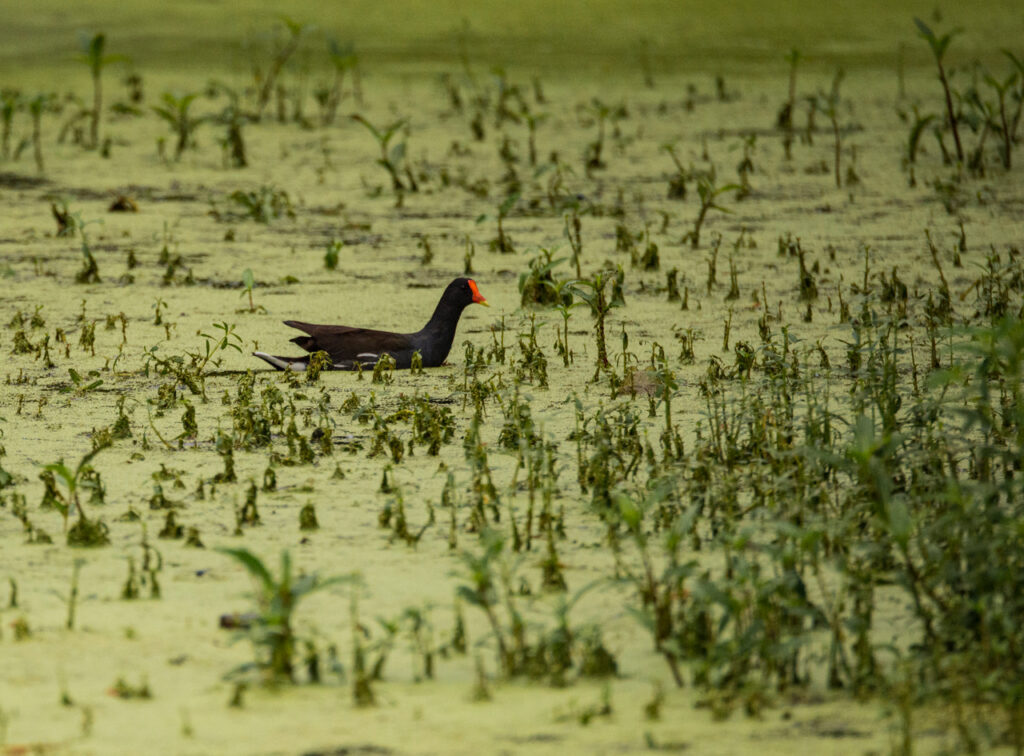
I really want to focus on the opportunity we have right now to reinvest in the nation’s water infrastructure to add jobs; support local economies; protect public health and the drinking water of children and people all over the country; help build resilience for communities, fish and wildlife, and outdoor recreation facing the extremes of flood and drought. So, regarding the threat of toxic algal blooms, dead zones caused by excessive nitrogen and phosphorous pollution, much of it is from intensive row-crop agriculture and concentrated animal feed lots. Much is from our own sewage.
So, we all have a responsibility here. Two days ago, the EPA/Environmental Protection Agency issued a call to arms to the states who are on the frontlines of these threats. To quote briefly from the memo:
Nutrient pollution remains one of the greatest challenges to our nation’s water quality and presents a growing threat to public health and local economies, contributing to toxic, harmful algal blooms, contamination of drinking water source, and costly impacts on recreation, tourism, and fisheries.
This is important:
Recognizing the important roles, responsibilities and authorities of all levels of government, industries, agriculture, non-governmental organizations, academia, and the public, the Office of Water will continue to foster and support partnerships and collaboration, which are critical to making sustained progress on reducing this significant threat to water quality and public health.
The memo goes on to outline an EPA announcement:
To support state planning and implementation of watershed- based, multi-stakeholder projects to reduce impacts to public health, specifically from nitrates in sources of drinking water and from nitrogen and phosphorous pollution contributing to harmful algal blooms.
This is a call for collaborative action, not federal overreach. Yet narrative on this federal overreach theme continues to be the drumbeat of the Farm Bureau, in particular. This collected concerted action requires significant change. It requires changing agricultural practices, and it will not happen without sustained public attention to some tough questions regarding who is responsible for this pollution.
This is not about blaming farmers. It’s about shared responsibility for the problems and solutions and who pays for this pollution. In dollars, it’s local, state and federal taxpayers and utility rate payers – all of us. Who pays for it in terms of poor health? One statistic, as of mid-August 2016 – not even a full year- is that 250 health advisories were issued due to harmful algal blooms.
So I remind you: it was media photos of the Ohio-Cuyahoga River on fire that moved Americans to address the water quality crisis of the late 1960s; led to the 1972 Clean Water Act; and then to making sure that it worked. The Clean Water Act brought the Great Lakes and waters nationwide back to life. I feel we are really at a similar juncture with respect to clean, safe drinking water and healthy rivers, lakes, and bays right now. So, I urge you to continue to report on these twin threats of aging water infrastructure and excess nutrient pollution and, importantly, the opportunities for all of us to collaboratively invest in solutions to both.
ELLEN KNICKMEYER Felicia Marcus is Chairwoman of the State Water Resources Control Board. With Governor Jerry Brown she’s a public face of California’s efforts to deal with its drought. She runs the agency most responsive with the press. Recently, a water blog described her efforts to deal with the drought and her being unable to do anything – even hand-carrying every last salmon in the state down to the sea for release. With her background in the EPA, she has a long history of implementation of the Clean Water Act. I understand she’s also trying to come up with a California water rule dealing with struggles over what waters you have jurisdiction, which you control, how to define wetlands and such.
FELICIA MARCUS Thanks, Ellen. I’m glad to be here. It’s also nice to be at a conference where I don’t have to talk about the drought, the Delta or water conservation. Since I’m going third, I just want to try to throw more in rather than clarifying. There are many places to go on these topics. I came up with 4 overall points to discuss and illuminate to help you each write a story. You now have so many now do them so quickly that it’s hard to see all the different angles. So I’ve tried to think of it in terms of what’s interesting about the war of words around wetlands in general, let alone the Clean Water Rule. And as an ex-EPA’er who implemented rules before, I realize those in the regulated sector feel like they’re playing Whack-a-mole with government.
Bringing clarity to the Clean Water Rule, as the US EPA and California are trying to do, is in the interest of those wanting to protect wetlands and those to be subjected to those rules, so they can have some certainty, planning, and basis for having a conversation. Right now, in the water arena, people tend to talk past each other. We must be empathetic. It’s very frustrating to be regulated when you don’t understand why, and things don’t seem to make sense. So let me lay out 4 sort of key points in looking at wetlands. One is appearances don’t tell the whole story. I’m going to come back to that since appearance is very important.
Much environmental writing is about rivers catching on fire, or the majesty of Yosemite. But when you get to wetlands, you’re in a public policy discourse, because wetlands lead to problems and fights. Mr. Duarte didn’t raise it, but some of my colleagues and I have spirited conversations, not because I don’t really fight with people. When I interviewed for this job, I told the Governor I’d probably drunk more alcohol on behalf of the environment than anybody he knew – because for me it’s going and talking to real people on all sides of an issue.
There’s often legitimate difference in ideology over the role of government. There are times, because of so much that’s hit agriculture right now, that you read of a “war on agriculture.” I see why it feels that way, because a bunch of rules that hit ag in the ‘80s, ‘90s, and even early 2000s hit ag all at once. It’s a business, but it’s also a calling. It’s probably the hardest job out there, and the margins are unpredictable. Farmers are subject to commodity rule, when frequently it seems folks should be able to do with their land what they want to – grow food or whatever it is. It’s not always agriculture, and I think that difference regarding the role of government can muddy the waters, so to speak, of the conversation.
These are conversations are as legitimate as they were in water conservation talks about whether the state should tell a local agency what to do. There were many big feelings in that, because there’s a legitimate argument up to the locals who say, “Leave us alone. Let us rise or fall on our own.” Frankly, government doesn’t help with the lack of clarity to regular people of the way we journalists write, talk, and even regulate our work. That sort of brings me to my 3rd point, as well as a reason why the Clean Water Rule is EPA’s attempt to do something good that limits them, but it’s not being portrayed as such in the civic discourse. So, the 3rd point is what makes it difficult. The rules have seemed less clear, whether it’s dredge-and-fill rules that allow people to pull “the Sierra”—what did you call them, de minimus, the mini mountain ranges.
I dealt with this when I was EPA Regional Administrator, and it was even more frustrating to be in it, frankly, than to be on the outside of it, because it’s kind of weird when EPA sets the rule, but doesn’t implement it all the time. It’s the Corps of Engineers that implements it, so we spend an incredible amount of time fighting with the Corps and threatening a veto to leverage a better rule from the Corps. It’s mind-numbing, because you can’t just decide to do a regulation and implement it. But it’s hard to write and explain these restrictions, partly because wetlands are hard to define, even at the state level. But the less clear you are in regulation and guidance, the more people will read into it the most negative thing.
In conversation, people will read the most negative thing into it. If our rules aren’t clear – and the subject matter is hard to be clear on – there’s more room for that kind of talking past each other and havoc. State rules can differ from federal rules, of course; and that’s what we’re working on now. But, frankly, we relied a lot on the federal Clean Water Rule so we wouldn’t be duplicating efforts where the feds stepped in. When the federal government started stepping back, because of court decisions, we were given direction in [California’s] Schwarzenegger administration to come up with a state rule. We don’t define Waters of the State. We don’t define wetlands as a state.
But, again, because we have that flexibility, regions where our stuff is implemented in the first instance have a lot of flexibility to call it where they see it; and they like that. The problem is that doesn’t give any certainty to the environmental community, which lacks trust that there’ll always be someone there they like. It also doesn’t give any certainty to folks in agriculture or any other industry who see other regions doing different things. That feeds into a feeling that we’re arbitrary; we’re not using a principled approach; that people in the regulated sector play into the level of discourse and the conflict; and why an individual case can become difficult. So those are the four key things.
One challenge in defending wetlands is “the appearances thing” is hard. I had been a public interest lawyer, working mostly in sewage stuff, so I always love when people mention sewage. I’m a sewage girl from way back. I’ve done a lot of different jobs. I got quoted once saying, “I’ve done garbage and toxics and air, but sewage was my first love.” But this isn’t about sewage. Sorry.
So, there I am, a public interest lawyer. By then maybe I was running the Public Works Department in L.A., so I wasn’t practicing. But in my neighborhood, I was right next to one of the last remaining wetlands in L.A. County, called the Ballona Lagoon, not the Ballona Wetlands that folks have fought about, but Ballona Lagoon. People in my neighborhood were going to a community meeting to argue about someone wanting to build homes on this lagoon, which is a ship channel that comes out of the Venice canals and empties into Marina Del Rey.
I said, “Well, I can’t get involved, but I’ll come listen.” They said, “Oh, we just want advice.” So, I sat in the back of the room and watched half the room talk about this wondrous, beautiful ecological marvel that needed to be saved at all costs. The other half of the room was saying, “What are these crazy people talking about? That’s a stinking mudhole,” which is exactly what it looked like, particularly at low tide. At the end, the community activist came in and said, “Well, what do you think?” I said, “Well, I have one piece of advice, which is those guys think you’re crazy. I know what you’re saying, but you should at least acknowledge that it looks like a “stinking mudhole;” but this is what the value of this resource is, as hard as that may be.
It’s true about vernal pools, even some of California’s most impressive vernal pool complexes. Vernal pools, also called depressions and prairie potholes, are things of their own. I’ve also stood at the mouth of the Tijuana Estuary with folks from the estuary programs in the Chesapeake Bay, Albemarle and Pimlico Sounds. There are estuaries wetter than ours.
Our estuaries do get wet sometimes, sort of like the tundra flourishing. Vernal pools, are called depressions and prairie potholes—and are things of their own. These depressions end up blooming on certain years, when they get a certain amount of water. Then there’s this incredible rush of life in them; as there are circles of wildflowers, fairy shrimp, all kinds of critters that are very important, not just in their own right, but as a food source for other critters – birds in particular.

Wetlands have this incredible value. Some call them “nature’s nurseries,” since critters spend an incredibly important part of their life cycle in them, but then they also create the food for all kinds of critters and others. So, there’s an incredible importance on wetlands that we could spend a whole half hour just talking about. They also serve as buffers and flood control buffers. We construct them for treatment and bioremediation. They’re better than a lot of the big fancy whizz-bang thing. Nature can clean stuff up if you slow the flow of all kinds of things through them. It’s remarkable, and so they’re important that way. They’re also important in terms of retaining moisture in uplands that will release its water later, which is important in California, for a lot of reasons.
But let’s think about creating more wetlands so as to solve remarkable problems, not just treatment. An interesting thing just happened in California’s Bay Area. They got together and have been working for a long time to not allow fill to be put in a single square meter of the bay. It’s been one of the heroic fights—you’ve written about that a lot—starting with Save the Bay. Now folk are coming together to figure out how to fill the Bay by creating tiered wetlands as a much better buffer against sea level rise than seawalls. They just passed a parcel tax on themselves for half a billion dollars to start protecting the bay and its wetlands while creating the multiple benefits of habitat for fish and birds and other bay species.
In California, we’ve lost 90% of our wetlands – a higher percentage than anywhere else. We need those wetland functions. If it weren’t for the rice farms in the Sacramento Valley, the Pacific Flyway birds would be toast, since we’ve lost all of our wetlands where they’d stop, rest, eat, forage for food, etc. The Sacramento Valley rice farmers have done an amazing job trying to work now with fish, the sea and its salt, which is unusual. Thank God it’s all there. Imperial County’s Irrigation district is trying to save this unusual wetlands, because that creates another “bus stop” for the birds on the Pacific Flyway. (See NWNL’s “Salmon on Rice, 2016” interview during the CA Megadrought.) If we didn’t have that and the rice fields, we would be in much worse shape. There’s a whole range of things, for which wetlands, as unromantic as they look, are incredibly important. The point I wanted to make here was just that we’re not saving them just for the benefit of saving a fairy shrimp or saving a critter. We’re saving them in terms of ecosystems, but also in terms of ultimately saving ourselves.
I’m not talking about wetlands being good for our souls or the redemptive characteristics of restoration, though those are real. It’s because we need them, and they can do things. That said, we need to be clearer about the need to implement them. The EPA is trying to do it with the Clean Water Rule that’s being litigated back and forth. We’re trying to do it with ours. But, I have to say, it’s hard. Our staff tried to do it a couple of times, and they did it, and they came out with something that was flexible. Why? Because they want to save every piece of wetland. Both the environmental community and the regulated community came and said, “This is crazy. This doesn’t help us at all.” They were saying the same thing. So we’ve sent them back to the drawing board – not necessarily to describe every single situation, because that is hard to do; but to at least categorize what’s off the table, like tire treads that things have found a home in and constructed ditches that are artificial.
We’ve got to find things that we can take off the table to give some certainty to folks so they can move forward. For instance, the whole issue of the “ag” exemption is really a hard one, because in the Clean Water Act prior cultivation of crop land can continue to be cultivated, as long as it’s used. We argue about it, because farming is also important, and you don’t want to make people stop what they’ve already been doing. The devil is obviously in the details. Next year, I really encourage some focus on the issue of nutrients, because the whole nitrogen cycle is challenging. We need to figure out how to do it, while we also retain farming, because we need food.
And getting to the conversation about how we do this is where we need to get, as opposed to just finding a new demon and demonizing the folks that grow the food that we then go eat.

ELLEN KNICKMEYER Thank you, Felicia. John, your incident happened before proposal of this Clean Water Rule, which is the Obama Administration’s attempt to resolve uncertainties in applying the Clean Water Act. You’ve become a symbol of its implementation problems. Do you see things headed in the right direction? Do you feel at all reassured?
JOHN DUARTE No; but thank you, Ellen. So, let’s play ball since, obviously, there are different perspectives. One thing is we have a documented legal case. We have depositions and discovery. We have agents’ field reports. So, we can bring anything anyone wants to say that may be wiggly or feels bad right down to facts. That’s one of the advantages of having a court case! A federal case – proverbially and literally – has given us a set of facts that now can be referred to by journalists such as yourselves.
Tony, Francois and I are civic legal foundation attorneys here today. We’ve taken reporters up to the site to show them exactly what biological facts are on the ground, and what the farming activities did or didn’t do in those areas. So that’s all available to you.
ELLEN KNICKMEYER John, could you speak more broadly about farmers, not just your case, but the concerns of farmers in general?
JOHN DUARTE Yes. The new ruling on WOTUS [“Waters of the US] came out. While some of the Farm Bureaus are concerned about it, the new WOTUS rule covering wetlands on our property could cover 95% of entire states and designate them as wetlands. We have, a ruling from a judge in our case that says, although there’s a plowing exemption in the Clean Water Act, plowing shall never cause a discharge. Plus, the soil from a plow shall, therefore, never be deemed a pollutant. That’s in the Clean Water Act and also Section 404 exemptions.
Now the ruling is that lifting the soil with a plow a couple of inches and laterally moving it a couple of inches to form furrows is now a discharge into Waters of the United States. That’s documented fact in case. So farmers are looking at this Clean Water Rule, and seeing over 30 places in that rule where it says, “Defer to the agency’s experience and expertise.” I’ve got a millions-of-dollars penalty lien against my family, because a field agent thought that I was deep-ripping 36 inches deep. A 10-member expert team from the Department of Justice and Army Corps of Engineers came and documented that the tillage was 4-7 inches deep.
So there’s discomfort on the part of the agricultural community that we must operate our farms by unobjective standards that defer entirely to agency experience and expertise. As people who eat, you should be concerned that farmers have no certainty of what the rules are when it comes to producing food for you and the rest of the world.
Where does our case stand now and where is it in the courts? A few months ago, we had a ruling come back from the local District Court Judge. We had about 4 “Summary Motion” rulings. One asked if the Clean Water Act exemption means what it says. We lost that. We also had a ruling asking if John Duarte can be held personally liable for acts of a corporation on his property.
The ruling was against that, and against Duarte Nursery. They’re valuing my home, because we planted the wheat where wheat’s grown before. We claimed that when we filed a due-process lawsuit. When we got a Cease-and-Desist Notice, we asked for a hearing and facts on which that notice was based. We had a 2nd Enforcement Letter – and zero facts, zero opportunities for a possible hearing, and zero clarification as to whether we could even harvest the wheat crop. That was the initial due-process lawsuit, with a specific legal foundation. After the Army Corps twice couldn’t get that dismissed, they counter-sued us on a “destruction of wetlands” charge. That’s where the $8 or $10 million in fines and penalties comes in.
We claimed that that was a retaliatory lawsuit. We had documented fact that when the tractor operator asked the investigating Federal Attorney, “Why are you guys suing the Duartes anyhow?” the Department of Justice attorney literally said, “Well, they’re suing us, so I guess we’re suing them back.”
The Government protected itself from our First Amendment claim on our facing a retaliatory lawsuit under “sovereign immunity.” That should scare anyone even moderately concerned with Constitutional Rights. When we sue the Government on certain First Amendment rights, the Government claims “sovereign immunity” in its defense. The judge stood with them on that. So now, we’re appealing on several fronts. We’ll see if the Department of Justice and Army Corps would like to haul us into court to have the “penalty phase” of the trial decided as quickly as possible before any of these appeal-able issues are decided in higher courts, possibly assessing millions of dollars in penalties against my business.
Right now, my business employs about 400 people in the Modesto area. In “peak season” we employ close to 1,000 each year. The government is threatening all those jobs. It wants to haul us into court to assess the “penalty phase” of this trial before going through the Appeals to find out if any of these issues derail it altogether. If that happens, before we go to Appeals we’ll be on the hook to bond any judgments. This court case over 40 acres of vernal pools that have already been planted in wheat several dozen times, is threatening 500-1,000 jobs and a family enterprise because of what, I believe, is a retaliatory suit.
ELLEN KNICKMEYER Thank you, John. Now Jan has something to say.
JAN GOLDMAN-CARTER That’s too much to respond to point-by-point. But it’s an example that reflects maybe even all 4 points that Felicia raised. First, Mr. Duarte’s case, along with the Pacific Legal Foundation, the Farm Bureau and others have put forward perfect examples of cherry-picking facts. What you’ve just heard is to me a stunning misrepresentation of both the Clean Water Act law and a very partial representation of the facts. Fortunately, we have a court system where issues are adjudicated in court. Before you report on these examples, I strongly urge you look at the law.
I have a copy here of the court decision by the Eastern District of California. Its section on undisputed facts is on the PLF web page. If you only read the facts that both sides agreed to, you’ll see a broader story. You must be careful about appearances and characterizations – not only in terms of what is a wetland – but also in terms of both sides of a story.
We are literally having to defend 30 years of what we call “horror stories.” The Duarte case does not involve the Clean Water Rule at all —although Mr. Duarte references this implicitly and his claims predate it. Ellen referred to that. He only vaguely relates to the issue of Clean Water Act.
The issue of Waters of the U.S, aka WOTUS. is only one small issue in the case: whether there’s a significant nexus between these vernal pools and downstream waters. So, this situation does not involve the Clean Water Rule. I want to make sure everyone understands that point. I’m not going to defend the way the Corps of Engineers implements the Clean Water Act. I’ve worked in the Corps of Engineers. Like Felicia, I know what happens. These are very complex decisions.
The Corps of Engineers has something like 50,000 of these jurisdictional determinations to make every year. They’re increasingly underfunded, poorly trained and they make mistakes.
I also know for a fact that you’re right – these guys do not have a good bedside manner. Often they are young people who could be much better at interacting with people. I grant you that. What the Corps decision reflects, though, is plenty of interaction for discussions and coming to resolution. It also reflects the fact that the Corps of Engineers went to the EPA to ask them to refer this case for an enforcement action. The EPA refused to do it. Yet the EPA continues to be held out as the bad guy in all these cases. I want to make sure you know that.
The Justice Department, as I understand it, only brought this case after the Pacific Legal Foundation filed action. So read the cases. Ask the questions. Don’t take one side of the story as the total story.
ELLEN KNICKMEYER We unfortunately must end it here, due to time constraints. Thank you very much to the panelists and to the audience members, and to SEJ.
NWNL EDITOR’S NOTE If interested in the lengthy, follow-up Question and Answer period, please contact No Water No Life for that un-edited transcription of that final section of our tape.
Posted by NWNL on February 5, 2026.
Transcription edited and condensed for clarity by Alison M. Jones.
All images © Alison M. Jones, unless otherwise noted. All rights reserved.