
Yosemite’s Native Stewardship
California Megadrought
|
NEW ESRI StoryMaps: What's On Our Shelves & NWNL Song Library & No Water No Life ESRI |
California Megadrought
Ben Cunningham-Summerfield
Indian Cultural Program Director
Kimberly Cunningham-Summerfield
Wife of Ben Cunningham-Summerfield
In 2016, the Society of Environmental Journalists met at Yosemite National Park and visited its Native American Museum. An open discussion with local Native Americans covered their past lifestyle and environmental connections, plus tales of their suffering when the Homestead Act and National Parks took over their home grounds. Despite that, they’ve maintained a deep respect for their land, trees, thunder, plants and ecosystems of their homeland. They have much to teach us today.
Editor’s Note: Indians spoke at this gathering without sharing their names, other than Ben Cunningham-Summerfield, their spokesperson and discussion leader.
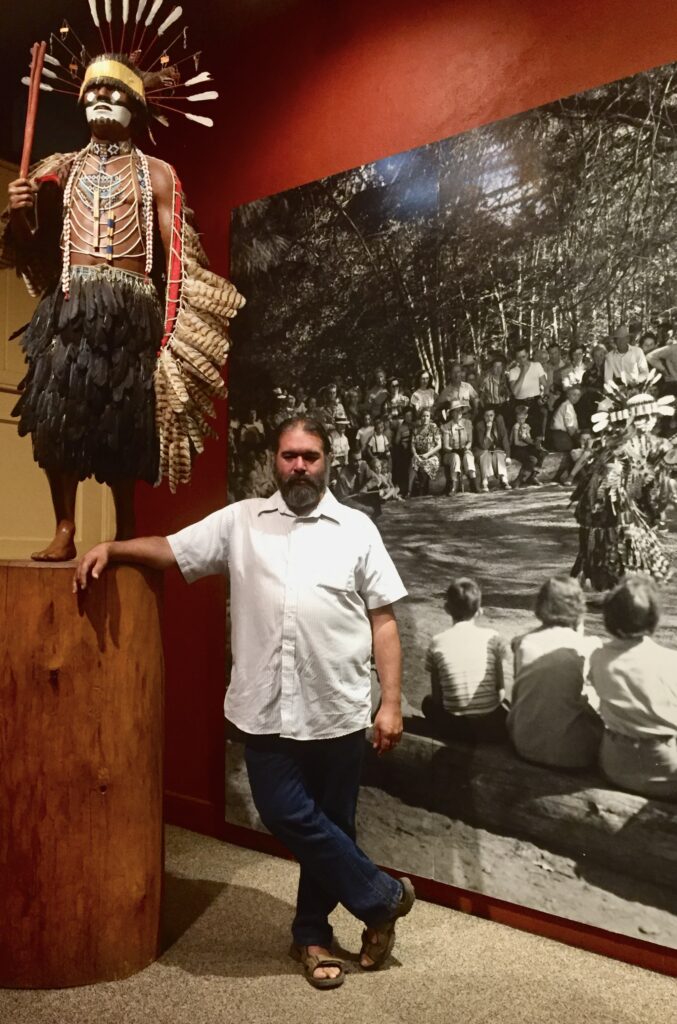
BEING NATIVE in TODAY’S YOSEMITE
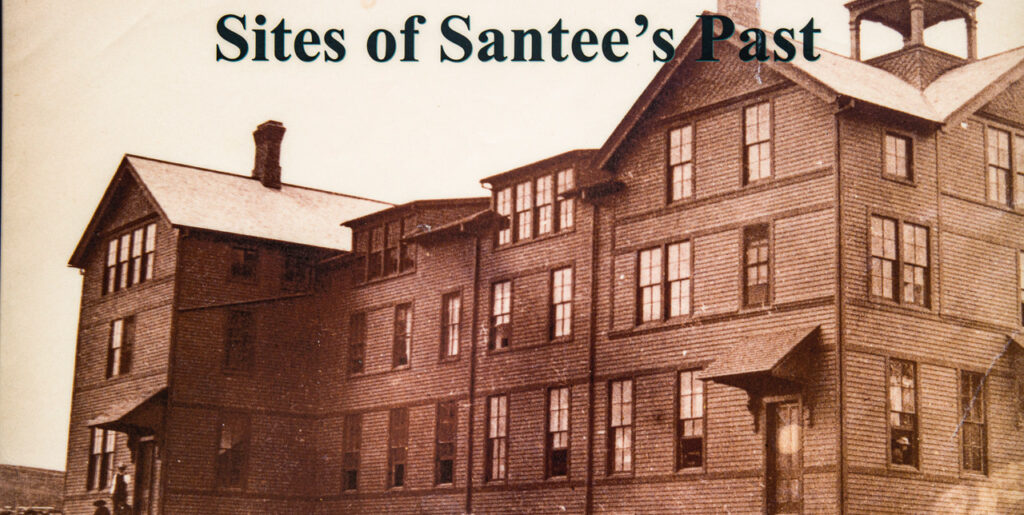
THE BOARDING SCHOOL HORROR
YOSEMITE MUSEUM
THE HISTORY OF THIS PLACE
STILL STEWARDING OUR “HOME”
FIRE MANAGEMENT OPTIONS
PROBLEMATIC TERMS: Untrampled & Ownership
LISTENING to NATURE, GRANDMAS & GRANDPAS
THE 1st CULTURAL BURN: A DANCE with FIRE
NATIVE AMERICAN RELOCATION
All images © Alison M Jones. All rights reserved.
Key Quotes Here, you see trout jump up in the creeks and rivers that are healthy and strong. The valley is fresh and clean – not just for us, but for every animal, insect and worm – because it’s healthy. We treat the waters well, and so life is good at home.
The definition of wilderness has been “untrampled.” But Native People have been trampling on this place for thousands of years without ruining its wilderness.
Our grandmas and grandpas – and in some instances great grandmas and great grandpas, and even great, great grandmas and great, great grandpas – would make sure the plants were healthy and make sure the riverbeds were healthy.
BEN CUNNINGHAM-SUMMERFIELD Hello, I’m Ben and this is my wife Kimberly. I took her name, and she took my name.
When you talk about Indian life, you think of our botanical knowledge and Indian cultural ways and traditions. People like me started out knowing we were Indian, but we never practiced Indian ways. We started out with canned Indian jargon. We took a little bit of this and a little of that — and that was our sense of identity.
I’m not sure how it happened, but during that transition time, I became the mascot, because most Indian guys were on the football or basketball team, or whatever. Looking back now, did I really do that? It was like being the last American Indian on Earth. I had a brown jacket, and I put cloth fringes on it. A friend of mine had given me a turkey tail, so I made a headdress. I didn’t know what I was doing, so I stood around; and people tried to make me laugh. That ended that for a while.
I was the high school mascot since those teams have warriors and Indian-motif mascots. I still feel the fallout of all that with the Washington Redskins. There was a sense of pride there; but as native people became more educated, some of those things that were prideful became hurtful.
A friend in Washington, DC started out as a one-man piece of art, living in a live art show called “The Last American Indian on Earth.” He says nothing sold as “Indian” is made in America – it’s all made overseas. An African American woman saw him on the Washington Mall walking around in his Indian outfit and indignantly asked, “Well, who do you think you are dressed up like that?” When she found out he was Indian, her whole attitude changed. She became touchy-feely and lovey-dovey. “Can I hug you? Can I take a selfie with you?”
In my transition during college, I became the president of the American Indian Club at University of California at Chico, aka UCC. There I met Kimberly. While at UCC, we spearheaded a discreditation lawsuit against the University. We had an annual pow wow the weekend UCC had a baseball game. Members of our team and the “away” team made disparaging comments about our people in the locker room. Our men had braids. That spearheaded us into a discrimination lawsuit against the University. We won.
Kimberly sponsored two conferences on diversity. as seen through Indian eyes. We made a very good team. We have been married for 22 years – and we still make a good team. Some things we’ve done in our lifetime were the right thing to do. Kimberly helped me focus on that aspect since I grew up in Indian country. My mother’s people are Chippewa from the Great Lakes Region.
BEN CUNNINGHAM-SUMMERFIELD Boarding schools were probably the biggest thing that impacted Indian life across the United States: in Alaska, in native life in Australia, and even in the difference between Catholics and Protestants in Ireland. With boarding schools, children were taken away from their homes, starting in the 1700s and lasting up to the 1980’s, when I think the last official boarding school of Haskell closed. Most of them were eventually turned into colleges or something to support traditional arts and language.
My father’s parents and my mother’s father all went to boarding schools. Indian students there learned a few things relating to Native life and a few ceremonies. But outside of that, it was sort of “summer school” for Indian kids, with no real culture.
Here, working in the Yosemite Museum, I have opportunities to interact with people from around the world; and to learn from them, teach them, and tell them the story of Indian people. This summer we’ve had noticeably more queries as to why there’s little information about the native life of Yosemite.
It is only this tiny piece right here in this small museum. Why isn’t there more? Why aren’t there more explanatory signs in Yosemite Park? One needs to be interested enough oneself to get out and find it, and to learn that “the sense of place” is very important for Native People.
Education has been a big challenge for Native People who grew up here on the Reservation. They decided they needed to leave for an education or other reasons. But if they left the reservation and came back later, they were – pretty much across the board – treated differently because they had chosen to leave. Not because they chose to come back, but because they chose to leave. “No one should venture beyond this world ” was the view.
Today, to be here with you, we came from Grinding Rock State Park, 6 hours from here. If you want to go to Jackson, California, take Highway 80 and make a left turn out towards that state park called Grinding Rock. It’s not called that because the waves grind it, but because the Native People have ground it with 5- to 10-pound rocks.
INDIAN SPEAKER He’s absolutely right. If you don’t get home enough, you miss a lot; and it is confusing. We’re all considered “dead.” We say there is THE Indian language. There is also the Indian culture…
INDIAN SPEAKER … and the Indian religion.
INDIAN SPEAKER Yes; and other things.
INDIAN SPEAKER We used to gather as a group like we’re doing tonight.
INDIAN SPEAKER But, we don’t do it here now. I’ve had Native parents come to me in museums in the past and say literally, “Oh, hey, don’t have babies anymore.” But they don’t do that anymore.
INDIAN SPEAKER Can I interrupt for a minute? That is like someone saying you are not African American because you don’t have dark curly hair. People do that all the time to African Americans. We also hear folks say we can’t be Indian because we have a beard – especially in California.
BEN CUNNINGHAM-SUMMERFIELD Yes, we get that all the time here in the museum, because we display pictures of bearded and mustachioed Indians.
I’ve often explained how it was to “go away” to school. It was worsened and exacerbated by being ripped away. I was terrified. It happened when I was little. Some stranger would come and take you away. You couldn’t understand that mom did not want to let you go; but did so because your brothers and sisters must be fed. We were told that if the kids don’t go away from this age on, the family wouldn’t get its rations. We wouldn’t get what we needed to survive. That’s the Indian boarding school story. That happened here.
And so, kids felt that they were torn away. “Mommy and Daddy left me and never came back to get me.” They didn’t grow up understanding they were supposed to be sent back. Those things occurred here amongst the Comanche and the people of Yosemite Valley, in a place like Gapping Mountain for example. That’s here.
All of us felt frustration, exasperation and fear. That was magnified by the establishment of this National Park and non-recognition of Indian life here in Yosemite by the National Park Service. It was all exacerbated because the Indians here are not federally recognized.
INDIAN SPEAKER We have all been told of the promises; and we all know about the broken treaties. We know about the burned homes. We know about the buses of rangers who came and said, “You guys gotta go; gotta go. Quick, quick, quick. Out, out, out. Grab something.” My mom left and the house was set on fire.
Or you were told, “If you don’t work here, you’re not coming back and there’s no housing. Oops, I’m sorry, you can’t come back to your sacred place. Your home, your land, it’s gone.”
We remember the quotes from Maria, the Chief’s granddaughter who said “What have you done to my valley? You have made it dirty. You don’t keep it clean anymore. You don’t take care of my meadows, or my streams.” All the dead branches…, all the litter here…, is because the people who took our land away from us don’t take care of it. They don’t understand what we must do to take care of it.
If you left to go away to boarding school, maybe you’d come back, but you wouldn’t fit anymore. So, you’d enlist in the military; see horrors; and have nightmares you can’t describe. When you came home, there was no home left, no place, and your valley had gotten dirtier.
That’s the history of this place; of the people here; and the struggle to prove our capability and knowledge. I do know what to do in this valley, in my place, in my home. I have that pride and joy of place when you can rest your head every night, at home. And that’s where we are today.
It doesn’t matter who you are. You can’t come home. It doesn’t matter if you’re a minor and always traded with your cousins and friends in the valley or up in the summer gathering place that was always clean, fresh and filled with laughter and games – because there’s no more home. You can’t rest your head there at night anymore.
BEN CUNNINGHAM-SUMMERFIELD We want to come home and rest our heads like our grandfathers did, in a clean place called home. We have an obligation in our hearts to bring back that clean place that was home. It was important to have that home, to see the plants grow up strong and healthy because with those plants you will raise good, strong children from those fruits and nuts.
You will hold the children’s hopes in your arms; the baskets that you weave; what you cook from the sprouts that come up from green beans in summer with their leaves popping down from the sky; with the promise of full bellies and happy souls around the fire; and happy people that laugh. That’s what our obligation is. That is why we take care of our valley.
You look around and you see the deer and you see the squirrels. You see the trout jump up in the creeks and rivers that are healthy and strong. The valley will be fresh and clean – not just for me, but for every animal, insect, and worm, because it’s healthy. We will treat the waters well, and know life is good at home.
This is why we do things. To make a home clean. It doesn’t matter where it is. It’s home. We have good fun with a garden in a backyard. You can ask any of us about the joy of pulling the weeds and eating the carrots.
And that is the same for the Comanche tribe when they say to us, “We want to come home and lay our heads down in the clean valley. Just like you. That’s why we do what we do. We do what we can do. We do what we need to do.
BEN CUNNINGHAM-SUMMERFIELD After I started working for the Park Service, I transferred to Resource Management to study the post-effects of prescribed fires and the pre-effects of fire on the area. As you know, Yosemite has had a prescribed fire-management program in place since 1970.
We’ve transitioned away from managing fires to prescribed fires, which I think is the best option. When you get sick, you go to the doctor, the doctor checks your symptoms and you get a prescription for medication to make you better.
Here, fire has symptoms that come into play when we write the prescription and introduce fire into an area. Kimberly and I can tell by walking through the forest what needs to burn and what’s doing okay. As you walk through the forest, if it feels like you’re walking on a waterbed, it probably needs to burn because there’s too much litter on the forest floor.
As you travel around Yosemite Valley, you’ll see little cages out there staked to the ground. That’s part of the Oak Restoration Program. It’s great to plant oak acorns. But what they’re leaving out of that effort is fire. If you have a bunch of leaf litter piled up on the ground, an acorn sends out a root that gets a leaf. Soon the root might make it to the soil. But usually, the ones that make it to the soil must contend with “root rot” because all that mulch is loaded down with moisture.
But by burning off all that material, the oak can start out on solid soil. It’s able to catch all the water because there are no leaves or dry grasses there. Sequoia seedlings are the same. This is part of the restoration program.
INDIAN SPEAKER Part of that burn includes two of our primary components: willow and grass, both of which need to be cleaned out. Willow responds very well, just like roses. What do you do with your roses? You cut them back so that next year you’ll get nice straight shoots. The willow grows the same way.
When a willow dies and curls up on itself, there’s so much dead material that the soil is so thick and nearly impenetrable. For the next couple years, we’ll have some nice material. Deer will have nice grass as it matures and dies back. Pretty soon, the shoots get shorter and sparser. So, by burning off the tops of that material and recycling it in place, you perpetuate deer grass.
If you want to grow primary material for baskets, most people go to the trouble to gather the pods and then separate the seeds from the pods. It turns out, you need to burn the pods with the seeds to get the proper chemical interaction for the seed to germinate.
BEN CUNNINGHAM-SUMMERFIELD We’re also looking at creating habitat. Often, when you have fires, you lose trees. Habitat increases as trees and logs fall into the river, especially increasing fish habitat. Bugs are good. Bears like them, so we need them. You’ve got to have trees come down. Fire doesn’t burn everything. It creates habitat, food and a healthier place for your neighbors. Sometimes you’re also killing off insects.
Even before Smokey the Bear, we had a fire-avoidance policy. But Mother Nature is now saying “Hey, you guys screwed up. You didn’t take care of the forest.” The problem is we tried to save it by stopping fires.
INDIAN SPEAKER Think about this…. If you’re a chocolate connoisseur and find an awesome chocolate bar, when you get down to the last little square you don’t want to eat it because then you won’t have anymore. So, you put it away. Maybe eventually you put it back in the refrigerator. Later you remember, “Oh yeah, there is that last little piece of the really awesome chocolate.” But it’s stale. Ugh!
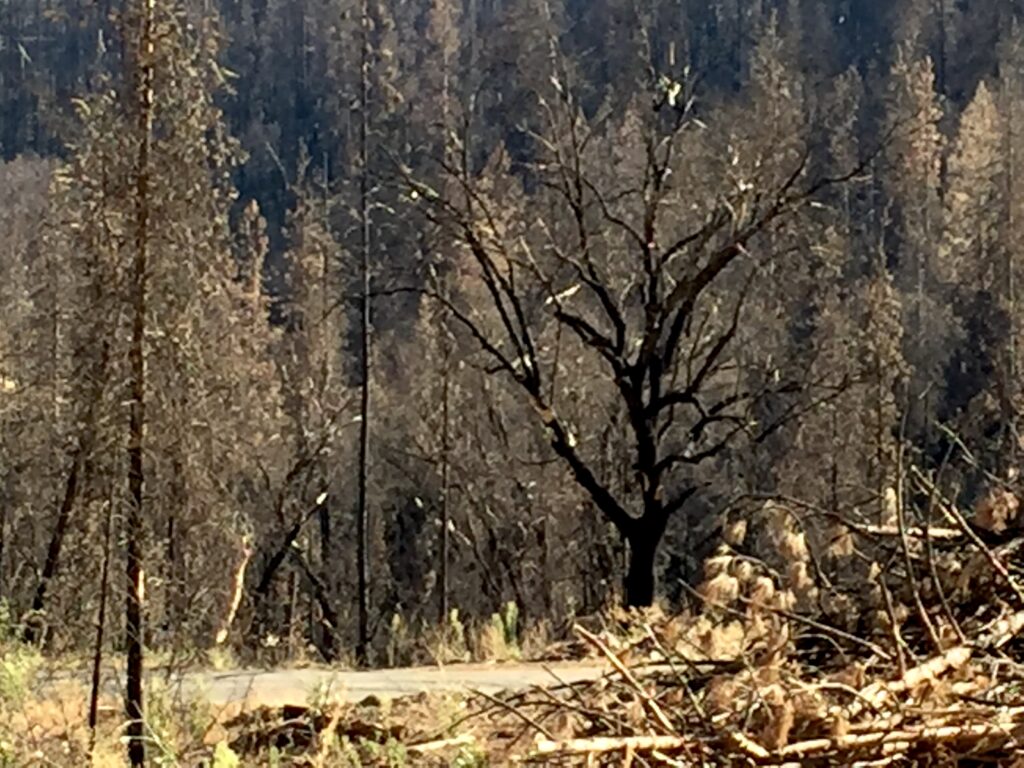
BEN CUNNINGHAM-SUMMERFIELD The definition of wilderness has been “untrampled.” But Native People have been “trampling” on this place for thousands of years without ruining its wilderness. The early 1900s introduced the idea of “ownership.” That concept has concerned me my entire life. Who gave the new settlers the right to “own” the land in the first place? It was a law called “The Homestead Act. “You still can legally “homestead” if you show that you took care of the property. Did you know that?
Every year it becomes more difficult to homestead. Legislation was a big part of that. Here in Yosemite, settlers that were here and whose descendants remain here had to have a permit from the National Park Service to live here. Then they said, “Since you have no home — no physical residence in Yosemite Valley — you have no lawful right to live in Yosemite Valley.” This happened across the United States during the creation of the National Parks and Wilderness Areas. Court cases come up all the time about picking up animal materials in National Parks or Reserves regarding traditional fishing and hunting areas. The National Park Service determinations apply only to federally-recognized tribes.
But, here, we are a tribe of people– aunts, uncles, cousins, mothers, fathers, sisters and brothers. Somewhere along the way, some Bureau of Indian Affairs representative came and said, “You see this creek right here running through all of your people? This is the dividing line. All of you people on one side are federally recognized. And all of you people on the other side are no longer federally recognized, plus all your rights and privileges are now revoked. So, you get nothing, while you guys over there get everything.”
That’s what we’re seeing across California. More so than in other places. You don’t see the Lenape or Navajo dis-enrolling people at a whim. But here in California they’ll dis-enroll 200 or 300 hundred people at a time. Whole families are disenrolled.
When we start taking things away from people – their rights, their privileges, their beliefs, their prayers, their songs, their very identity – they’ve got to do something to hold on. They must be protected and preserved.
INDIAN SPEAKER Ben mentioned earlier that Yosemite had prescribed burns beginning in the 1960s, with more intensity in the 1970s. It was a thorough program, nationally recognized as one of the best prescribed-fire programs.
The purposes for the most part were for cleaning – to preserve views and spaces so we could still see the falls. That effort was to reduce fuel to someone’s specification. I never quite understood. Anyway, none of the cleaning was for cultural purposes. There was an effort to have them for cultural purposes and in a cultural manner. Having come from that era of boarding schools and understanding where that comes from and who they are, we know we have an “I know….” system. “I know everything. Therefore, I am beyond any criticism that exists.” The “I know….” system exists not only amongst those who are educated, but those who are in supervisory positions.
I don’t know what kind of cross-over there is from Native Americans into supervisory positions. Most Natives haven’t been educated and thus haven’t been placed in supervisory positions until most recently. We don’t have a lot of college graduates. Those numbers amazingly have begun to increase significantly within the last 20 years.
But in the 60s and 70s, even the early 80s, 90’s, few Native Americans were college graduates; so, we couldn’t compete on that level. Therefore, we don’t have the knowledge to develop fire procedures or to understand how, when or why to do such important technical and scientific things. But we did have grandmas and grandpas and they were smart. More importantly, they knew how to look, stomp on the ground, and run like hell – and we learned how to make fire. Our grandmas and grandpas – and in some instances great-grandmas and great-grandpas or even great, great-grandmas and great, great-grandpas – would make sure the plants were healthy and make sure the riverbeds were healthy.
BEN CUNNINGHAM-SUMMERFIELD So, we had to save ourselves and run like hell. Sometimes we were blessed. We had grass and grandpas who taught us things that they didn’t teach at schools. Schools didn’t teach us to watch a bird just dance a bit in a little breeze and then scoot over under the trees to nibble at the pine needles. They didn’t teach us that the birds tell you when it’s time. They didn’t teach us that the trees have songs when they creek, or that the cold wind will keep the fire cool and slow. They didn’t teach us that in schools
INDIAN SPEAKER Have you ever watched, as the sun continues to change its angle, that the shade goes from here to there and this piece dries out.
Native land use and fire management is all about the timing. One day we went out with a good friend. It was spring and the grass was tall, but the dead stuff was tall. Over here the grass was a little bit shorter; and over here there was not so much grass, it was sparser.
As we were wandering around, you could see life in the plants and the smells and the wind. And I’m not kidding you about the way the trees sound. Nature tells us things because we are beings of nature. We don’t come from steel-and-glass cities. We just sleep there sometimes. Maybe too often…. I don’t know.
We’re not supposed to be separate from nature, because nature is part of us. You really must listen; you must smell; you must taste to feel it; and most obviously, you must watch the repetitiveness or at least have those experiences of seasons and of time. If you don’t have those experiences, you don’t have the teachings and you don’t know.
Opening yourself to nature is amazing because you learn so much about yourself and what’s there. There is a sound difference between the wings of a honeybee and a bumble bee. We must listen and experience. Grandmas and grandpas know that. And when I say “grandpas and grandmas,” I don’t restrict it just to Indians, because, oh, that’s not so. Grandpas and grandmas know tremendous things that we’ve lost by not listening to them – and by not sitting outside and listening to what is all around us and what nature is saying to us. That includes rocks. Rocks talk.
BEN CUNNINGHAM-SUMMERFIELD So, back to Yosemite Park and the burns. There was an opportunity and language was written here in Yosemite to have burns. But there was an absence of willingness to allow those lacking formal “ivy tower” training to take the initiative.
We began to sell staff members on the idea of a traditional cultural burn. It took 10 years and several changes in management administration. Most were uncomfortable with it and didn’t want to hear about it. Well, the burn is always this time of the year. There are some important plants to protect, and we need to burn after the gathering time of certain plants. Then you can do a nice hearty burn. The immediate response was: “That’s crazy! You want to burn in November? You’re crazy.”
After 10 years of talking, showing them pictures, stomping around in the bear beds and water-level checks – finally, they got it done. They had two trucks and did a traditional ignition. Two men ignited the fire and the elders sang. Prior to that, they discussed with firefighters how to pick up after the initial fire was started in a fire pit area. They covered how to take lit pieces out of the fire to spread the fire, and how to pick up the fire with sticks to use to feed fire in the meadow.
The meadow burned and the wetland burned – and then the yelling began…. “Oh, it’s going to get in the trees! We don’t want it in the pines! Oh, my gosh!” The natives said, “Just calm down.” And sure enough, the fire went up into the pines and ate up some of the pine needles that went “sshhhhhh…..” for 6 feet up and burned hot down through the blackberries. It burned.
They said, “Oh, I hope this will work. I hope this land survives and comes back.” On Monday, interpretations of an Indian cultural staff member and a ranger were that it went out into a wetland and found green trees growing high, saying “Ah, I can breathe.” That fire was right. It was perfect. That was one of the first, if not THE first, “cultural burn.”
INDIAN SPEAKER One of the biggest complaints and concerns were guests complaining about smoke. That’s always the biggest concern when there’s burning in the valley. We do have to contend with tri-county air quality.
INDIAN SPEAKER There was great cooperative action from the Park Service, fire fighters and other individuals who came together. We had a beautiful fire. It burned exactly where it was supposed to; and to the temperature and degree it was meant to burn. Couldn’t have asked for a better one. That was in 2005.
But political and public fear plays into the burns. Fire herself is power. She is beautiful, creative and destructive. She has an unworldly quality and a romanticism that has come up through eons. But she also has cruelty and that destructive power that so many fear.
INDIAN SPEAKER You can’t roast marshmallows in our fires.
INDIAN SPEAKER That’s right. You need to learn to respect fire – to dance with it, if you will – to find the quality of life it brings. If you respect fire, you can learn and appreciate fire. It’s amazing what fires can do for you.
BEN CUNNINGHAM-SUMMERFIELD Are you all familiar with the relocation issues that faced Indians? There was the Relocation Act. But there’s also my life. I have a screwed-up background. My tribal history by birth is different from that of my foster parents. Papa is the great, great grandson of Tania [ED: the spelling is uncertain] and my Momma Bear is from [another tribe]. While I have connections here through my foster parents, I don’t count as a local native – like others – even though we live here and we are natives.
Indians have moved. Boarding school affected lives of many of the kids who came here afterwards. Many kids went to Stewart, to Riverside and to the school named Sherman. Some went to Carlisle High School. Kids got shuffled around, in and out of various boarding schools. They purposely mixed the kids up so that they were here, there and everywhere.
In summer, people came here to recruit kids, particularly for Grand Canyon and Yosemite. Since before Yosemite was a park, Indians from here have been hired to do side work, housecleaning, and sell our baskets and wares – plus knockoffs. Visitors prefer to buy stuff from Indians rather than white people; but the Park didn’t want Indians seen, because we were still viewed as “cast-offs.”
INDIAN SPEAKER After the settlers came in, the native people wore any style or whatever cast-off robes were available. They were still considered to be quite unacceptable, so the Indian people were moved from their homes up into the higher slopes amidst the rocks, where they did the best they could.
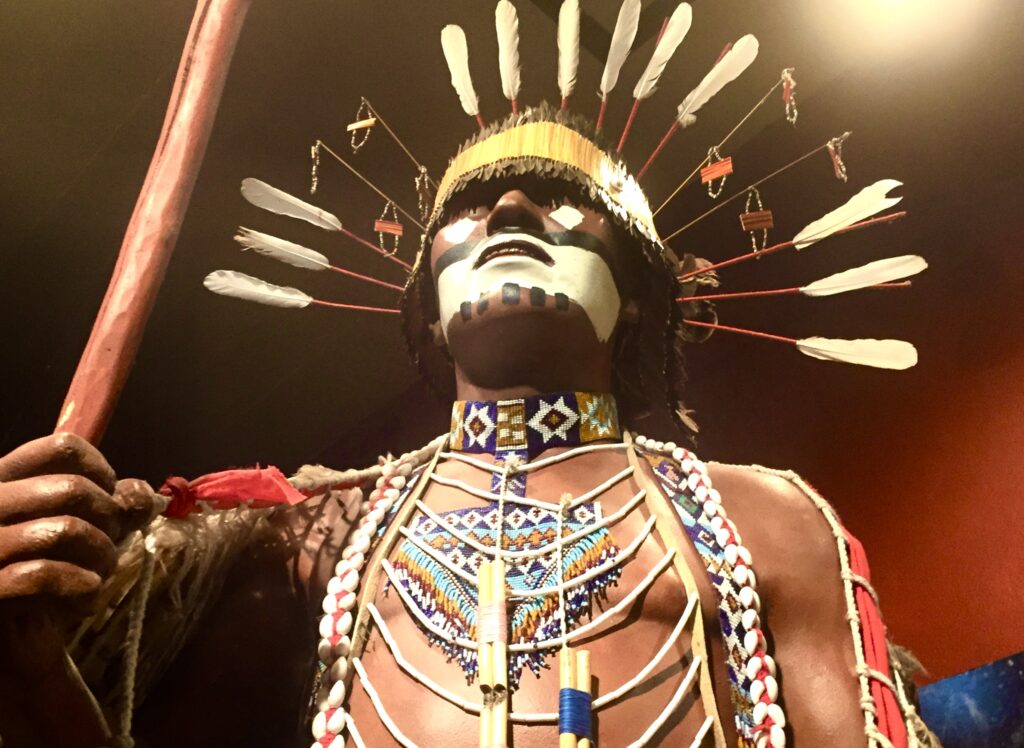
In 1960, we started the Yosemite Indian Field Days, for which the Park paid the Indians to dress up like the Indians on the Great Plains, because that’s what visitors then expected to see.
INDIAN SPEAKER And still expect to see!
INDIAN SPEAKER Still, yes. Visitors from across the globe expect to see me dressed in deerskin clothes, feathers in my hair, and clean shaven.
JOURNALIST Would that be typical of this area?
INDIAN SPEAKER Well, yes for ceremonies, but not as everyday clothing.
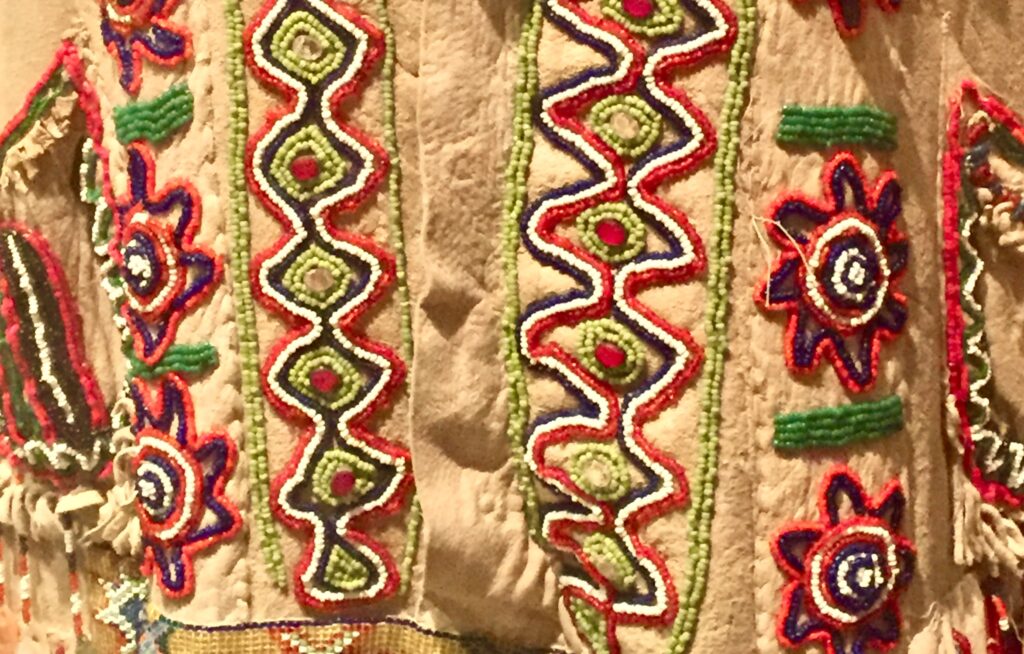
FEMALE INDIAN SPEAKER That’s ceremonial clothing we wore 300 to 500 years ago. Today’s people are very uncomfortable in those because then we wore grass skirts or such, depending on where our location in California. Some others wore solid buckskin skirts, gored on top and bottom. Sometimes they had leggings, but those leggings came up high and showed flesh. The body was just not a big idea for us. But even today, our traditional day-to-day clothing isn’t acceptable. We are not allowed to wear that.
Here, in the 1970s, we demonstrated “pre-contact” village life, with modifications. All girls were supposed to wear tops and buckskin skirts to suit others. As shy as I was – I was going topless.
BEN CUNNINGHAM-SUMMERFIELD The fact is our children ran around naked for a long time, male or female, until they hit puberty.
INDIAN SPEAKER Our tradition was not acceptable. We were not acceptable. We just plain weren’t acceptable. How we looked, what we did, even what we ate, was not acceptable. White people didn’t like stuff that we wore, or how we dressed. We were not acceptable. So, they changed us.
Posted by NWNL on January 12, 2026.
Transcription edited and condensed for clarity by Alison M. Jones.
All images © Alison M. Jones, unless otherwise noted. All rights reserved.