
An Atchafalaya Basinkeeper’s Concerns
Mississippi River Basin
|
NEW ESRI StoryMaps: What's On Our Shelves & NWNL Song Library & No Water No Life ESRI |
Mississippi River Basin
Dean Wilson
Atchafalaya Basinkeeper, Louisiana
Alison M Jones
NWNL Director & Photographer
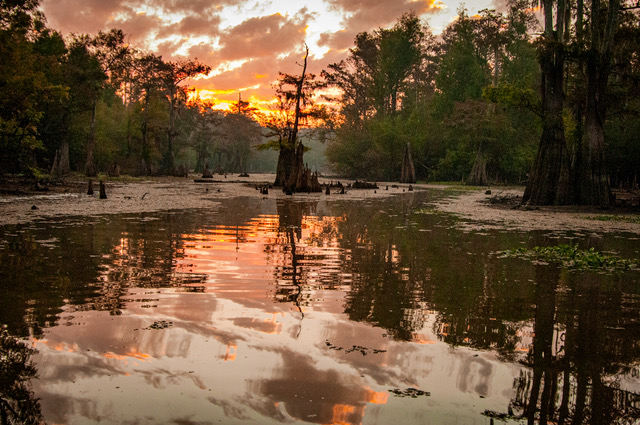
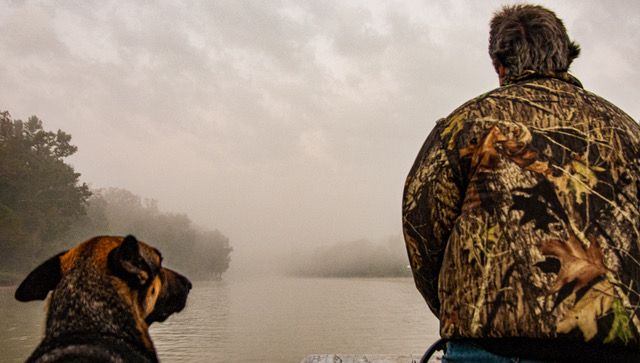
Dean Wilson is the epitome of a dedicated conservationist. He quickly agreed to this interview and offered a boat ride around Atchafalaya Basin bayous, in and amongst young and ancient bald cypress trees draped with long trails of Spanish moss. To complete my immersion into the renowned Cajun lifestyle in this basin, he invited me to join his family for a Cajun dinner. Dean grew up in Spain, and then headed for the Americas, intending to land in the Amazon Basin. But en route, he discovered the Atchafalaya Basin and stayed – fortunately for the future well-being of this unique U.S. waterway that supports amazing wildlife and a fascinating culture defined by and deeply immersed in its watery roots.

THREATENED BIRDS & FUNDS
US ARMY CORPS of ENGINEERS ROLE
THE BASIN’s CRITICAL WATER FLOW
CYPRESS: SYMBOL of the SWAMP
ENGINEERING the ATCHAFALAYA RIVER
THE CYPRESS MULCH COVER-UP
SEDIMENT MANAGEMENT
A BAYOU TAKE-OVER
A MANAGEMENT PLAN
Key Quote The USACE should enforce existing laws and protect these wetlands. They should stop floods in the Gulf, not let them end up here in the Atchafalaya Basin’s cypress swamps…. If the USACE did that, we’d have no problems; and I wouldn’t need to be Atchafalaya Basinkeeper.… Then I could hunt with my son and fish, instead of working weekends as my son does something else. – Dean Wilson
All images © Alison M. Jones, unless otherwise noted. All rights reserved.
NWNL Dean, you’ve kindly piloted me around the Atchafalaya in your Basinkeeper boat, showing me the beauty of the bayous and explaining your concerns. Yet, I’m still full of questions, since I come from “the outside.” I want this interview to highlight our conversations on the water and more– before we join Karen for a Cajun supper in your cypress-encircled home!
As caretaker of this legendary waterway, what’s the passion that pushes you every day? What’s the message you use to raise people’s awareness and address the threats you witness daily? How do you involve legislators and others outside this basin? How do you communicate to them the importance of the Atchafalaya Basin and the threats it faces today?
DEAN WILSON I try to communicate and show how important the Atchafalaya Basin is for everybody – and for many species. Most tropical migratory birds come to the US through the Yucatan, Gulf of Mexico, and finally the coastal wetlands of Louisiana. Thus, this is the most critical habitat in North America for migratory birds.
These migratory birds have two main habitats: the coastal forests of Louisiana and the boreal forest in Canada. Most people don’t know that these waters are much more important than Florida’s Everglades. This is the most productive wetlands in North America, and probably its most beautiful wetlands. They’re truly one of the “Wonders of America.” Yet there’s no protection for them. We can get federal dollars; but federal dollars not safe anymore because there’s so much corruption in Louisiana.
People living in the Atchafalaya Basin keep begging the federal government, “Please do not send more money to protect our wetlands, unless you add secure provisions to ensure the funding is appropriately applied.” Right now, the State of Louisiana has a blank check for their projects. So, billions of dollars given to the State of Louisiana are now used to destroy our wetlands. There’s not a single project today in the Atchafalaya Basin that will support these wetlands. But we can’t fight that kind of money to preserve the basin.
Congress wants to preserve these wetlands; and we want them to preserve them. We are not an enemy of the wetlands – we want them to survive! We want that money from Congress to spend here, where it needs to be spent. But when it goes into people’s pockets, nothing happens to help the basin or wetlands infrastructure.
So one of my messages is: “Please support funding to protect these wetlands, but make sure funds don’t go to easements with loopholes that don’t protect anything.” The funds must have enough provisions to guarantee they’ll be properly spent. If legislators do not want to do that, we don’t want those funds. Thank you.”
NWNL What support would you like from the US Army Corps of Engineers (hereafter, USACE)? If you were General of the USACE – their top position – what actions would you support? I know your wish list would be well-informed and credible, given your many years here in this Basin.
DEAN WILSON I’d ask them to do their job. I’d say many things but wouldn’t know where to start. What we most need from the federal government and the USACE is for them to simply do their jobs. There are incredible environmental laws, put there for a reason, that they should enforce. Folks acting illegally, without permits, should go to jail. We can’t stop the crooks, because we can’t identify the crooks operating without required permits – but the USACE could.
So, if the USACE enforced our environmental laws instead of supporting illegal destruction of wetlands, they’d fulfill their job to protect ecosystems – and thus solve our problems. The USACE should enforce existing laws and protect these wetlands with the engineer who created Louisiana’s flood protection plan. They should stop floods in the Gulf, not let them end up here in the Atchafalaya Basin cypress swamps. I’d say to the USACE, “Use your brains and your technology to do some good for the nation, for everybody — not just for that handful of people who control the land and the State of Louisiana.
If the USACE would do that, we’d have no more problems. I wouldn’t need to be Atchafalaya Basinkeeper, and instead, could very happily just be a commercial fisherman. I don’t like being the Atchafalaya Basinkeeper – it’s not my job of choice. I want to go back to fishing. What I do should be the job of the EPA and USACE. If they did their job, I could have a life. I could hunt with my son and fish, instead of working weekends as my son does something else.
NWNL What has happened regarding flow regulation in the Basin? Some say that the Corps of Engineers should change their formula, and end the current, year-round and flat 30% flow coming in. Should that happen?
DEAN WILSON At this point, we’re completely against changing the flat 30% flow rate – for one reason. We want the closest thing we can get to “natural flows” in the Atchafalaya Basin. Then nature would control where the water is goes – not powerful individuals. The flat 30% rate would be as if they were granted the power of the rain – as if they controlled when and where it rained. If USACE could control the rain, the only place it would rain would be where there is a millionaire. Everybody else would face drought and be dead of thirst.
We don’t have a political system that’s clean enough for us to say, “Okay, let the USACE manage the structures for the betterment of the basin – it will be great, because they’ll increase water quality by letting in the water.” Under an ideal situation, when the water comes to a certain level, you could lay a plateau, restrain the water with logs, and then let the water out. When the water reached a certain level, you’d open the logs and let it go back up. Sometimes you’d get 5% back, sometimes 60%, and you could pulsate that water to make it better. We could make it better by doing that. But now you can’t because of the political situation in Louisiana.
DEAN WILSON The Atchafalaya Basin landowners first want to silt the basin and then dry out enough of the basin so they can get to the cypress trees and cut them down. When a cypress is cut down, it doesn’t come back. It’s gone forever. “Forever” is a big word: it suggests our cypress trees could become extinct from the Atchafalaya Basin. Cypress trees are the heart of this swamp. Animals in the swamp can’t survive without cypress.
Yet Congress keeps telling the USACE, “Okay, do whatever you want.” So because the USACE is controlled by the State of Louisiana, they, our politicians and other powerful people, will completely dry the swamp. We want to leave it the way it is. I think this will be a fight.
Some folks say, “The Red River (a swamp tributary from Texas, Oklahoma and Arkansas) needs more water for navigation. Somebody else wants more water for something else. Some want less water. It will be a “Fight of the Titans” – and we’ll be completely outside a fight between farmers and landowners. The titans will dictate where the water will go – and it won’t be for the benefit of the commercial fishermen or better habitat for the birds, ibises or crawfish. The local species won’t matter anymore. At least right now, we are in the same boat. It’s like the weather. When there’s a drought, we’re thirsty. When rain comes, we’ve got plenty of water. When the river comes up, the Atchafalaya comes up. But if the rivers are engineered to flow into the Mississippi River, then we lose the water.
NWNL I’m glad you’ve explained flow regulation. As a follow-up, how do the cypress cope with fluctuating water levels?
DEAN WILSON We get flooding here on average from February until July, and it pretty much kills everything. But historically, the cypress will survive, even in drought years. When you go through this riparian-forest ecosystem, you’ll see a lot of baby cypress. They need for the water to stay low. They cannot be completely flooded for 45 straight days. But, historically, we get that every so many years, just like we get drought periods. But now, because of the levee systems, we don’t get those anymore.

DEAN WILSON The Mississippi is like the Amazon River. All the way from Louisiana up to Missouri, there was a flood plain. But where’s the Delta today? We drained it as we leveed the Mississippi. The Delta is all farmland today, since our levees have held back all the water from the Mississippi River that used to spread over so many millions of acres. When it comes to Louisiana, the Mississippi forks into two rivers: the west fork is the Atchafalaya River; the rest continues down the Mississippi River.
The Atchafalaya parallels the Mississippi all the way to the Gulf. They cut the surface of the Atchafalaya Basin into half of what it used to be. So, this basin is like a bathtub: if you cut this bathtub in half, where will the incoming water go? Up! There’ll be more in the bathtub. That’s what happened to this basin and areas in Louisiana that now have more potential for flooding.
Then we brought in nutria. [Editor’s Note: Nutria is an 8-9 lb. herbivorous, semiaquatic rodent.] Nutria eats the roots of our cypress, and we can no longer protect our cypress, since the nutria has learned how to dig pipes. You can put pipes alongside to protect them, but even that can’t protect them any longer.
By fall 2000, they were down cutting cypress in Louisiana and selling it as “environmentally harvested” mulch, in a bag with a fraudulent address. So, the buyers’ perception at the store is it’s a green product coming from Florida. But the reality is it’s from forest that will never come back again. How much more anti-green you can get?
Another company advertises our cypress mulch as “forest-friendly forest mulch: a 100% byproduct.” One guy told the media that not a single cypress was being made into mulch in Louisiana. I have pictures from the air of entire mulch plants; they only have cypress.
Those Louisiana mulch plants don’t have any branches or treetops. But the state will say, “Oh, we use the leftovers and waste in the woods, like the treetops, branches and lesser stuff now.” That’s not true, and we can prove it again. I’ll show you some pictures at home. We flew over all the plants in Louisiana, and they have nothing but solid logs. Yet these plants claim their “forest-friendly cypress mulch” is 100% byproduct – no single trees in their plants.
We shared the information with the government rep, Molly Day, whom you met and who used to work for the government.. The pictures showed the mulcher and a pile of logs next to the mulcher. The government rep said, “Those logs there aren’t going to go to the mulcher. They’re going to be used for lumber. And I’m going to sue you.” Then Molly Day said, “Oh, yes? … and what about our photographs of them mulching the whole tree. You can clearly see the trees going into the mulcher.” So, they were caught.
The guy swore he was using nothing but byproduct, and some of it was just a little bit bigger. He then added that in the 1800s they didn’t cut down trees that were too small and just 120 years old. But today they’re over 200 years old, and big enough for lumber, so he’ll use those trees for lumber. He said the rest goes into mulch, because he must hire 10 times the amount of people to make lumber instead of mulch, and so he’d have to pay10 times the salaries with benefits, etcetera. But even though, per tree he makes a lower gross amount of money on mulch, in the end he doesn’t have as many expenses, so he makes more money by making mulch.
If you fly over his plants, you won’t see a single treetop or branch, because you pretty much need to bring an 18-wheeler and mulching equipment to the swamp to make mulch at a profit. Instead, he fills up with the logs. We have aerial photos of the logging sites where we can see treetops everywhere. Then we followed the truck to the plant with its sign that says: “Forest-friendly cypress mulch.” When we fly over that plant, we never see any treetops or branches anywhere.
[NWNL Note: On this expedition, NWNL chartered a plane and overflew Atchafalaya Basin logging sites that met Dean’s description of strewn treetops and branches. NWNL also has photos of logs being illegally transported from those sites by boat to waiting trucks.]

NWNL Dean, you have a Management Plan for the Basin? If so, how does that help you? Can it assist you in saving the ecological integrity of this Basin?
DEAN WILSON There are two main threats to the Atchafalaya Basin. One is what logging is doing to the trees, which we just discussed. The other is sediment. All this land is supposed to be several feet deep, but it’s full of mud. The Atchafalaya Basin is intentionally being filled with mud. The USACE keeps straightening bayous and rivers from the Atchafalaya River, saying it’s for navigational purposes. But there’s no navigation on those bayous, since none of them go through to larger waterways. The only navigation is that of Cajun fishermen and residents – and you don’t have to make straight rivers for them.
The USACE is focused on oil; so it, commercial fishermen, and those who want to navigate the bayous quickly and with ease want straightening. But we want bayous that make turns and wind around. The only reason the USACE and their associates want straight rivers is to move sediment. The straighter you design a canal, the more water will move through it and the faster it will move through. With faster water, you’ll move greater amounts of heavier sediments farther away into the wetlands.
Also, the USACE is averting sediment flow. Their goal is to reduce the current 60% of sediment load in the Mississippi River to 25% on average as that water flows into the Atchafalaya River. They can’t accomplish their stated goal. On average, I think we’re getting 50% of sediment load on 25% of the water. They say their reason for that is to slow down river traffic.
So now the Atchafalaya River is becoming deeper every year. You don’t have to be a scientist to realize that if a river is getting deeper and deeper, it’s because of its current. You cannot slow a current by throwing mud in it or sand, because the current will just move that down the stream. You must put rocks in if you want to slow down a river.
So, I think the only reason they’re doing that is to fill in the Atchafalaya Basin wetlands since that’s what the landowners want. The State of Louisiana will divert money to straighten canals in order to fill what they call “marginal wetlands” – as does U.S. Fish and Wildlife Service. I asked one guy from Fish and Wildlife, “Why do you call it “marginal wetlands”? I don’t know of any “marginal wetlands” in the Atchafalaya Basin. The worst wetlands in the Atchafalaya Basin are better than the best wetlands you can find in the country.”
The same day Mike told me he was in Buffalo Cove, having pulled in $400-$500 worth of crawfish and told that to Fish & Wildlife! That’s a lot of crawfish for the month of August, which is the end of the season. That wetland supports all the ibises, owls, crawfish, storks, and everything that feeds on crawfish.

These landowners are now about to start legal action on these cases. One landlord got an easement in 1999 stating they cannot put permanent structures on his land. He agreed to the easements and got $1 million out of the easement. The year after that, an energy company called for a permit from the Corps of Engineers to put some boards on the ground to bring in equipment for putting up an oil rig – requiring an extension in the easement for oil extraction.
Well, they committed fraud regarding the application, because they didn’t use any boards. There was no existing road, so they put in an elevated road with permanent limestone, plus a dam and more…. The fishermen complained, because now they can’t use the state-owned bayou. That bayou supports the livelihood of those living on the bayou. They navigate through that bayou, fish there, and enjoy many other activities.
Local folks complained to State of Louisiana, which did nothing to reverse that action. That year, the fishermen told me about Brown Bayou, and I contacted the USACE. They told me to send an email with all the information I had. After they got the information, they said that they wouldn’t take any action, since it had been 10 years with no complaints.
I replied, “What do you mean? You just took action against someone else building a dam that same year.” Their answer was that dam-builder didn’t have a permit, but these people had a permit. “We cannot guarantee that what they did is related to the permit.” But, you can’t have it both ways. They either committed fraud, and you should go after them; or they don’t have a permit, and you should go after them. You can’t have it both ways or just when it’s convenient for you to protect them.
We pay $1 million for USACE to protect these wetlands. But they allowed a building project for an elevated road 6’ high with limestone and a dam. That left tar in the bayou and broke all the sediment flow on the basin for 2.6 miles east to west.
They then turned around in 2007 or so, to apply for another permit, involving the same company and same landowner, regarding land with $500,000 of easements – again the same warden, and again stating they’d use boards on the road. They put in over 1 mile of elevated road, blocking three bayous with limestone. The USACE caught that builder right by Highway I-10. You can see that road from I-10. That’s the second time that they gave away easement land.
Folks will keep asking for those billions of dollars, since the government refused to buy the swamps to protect them. They just keep giving in to easements and allow whole bunch of loopholes. There’s no enforcement of the easements. Folks just put millions of dollars in people’s pockets, so nothing gets protected in Louisiana. Builders just keep asking for more. They’re ruining the bayous and the fishermen’s livelihoods.
We’ve told the State of Louisiana, “We’ve had to fight for every penny that comes to the Atchafalaya Basin to protect the wetlands.” Congress gives that money to the USACE to protect wetlands; and they use it to destroy wetlands. So, without very strong provisions from Congress, we don’t want Congress to allocate any more money. Yes, we need to protect these areas for our kids and grandkids; and we need lots of funds to do so,. But if we don’t get those provisions, we don’t want the money.

So back again to my Management Plan. We want to stop the inflow of sediment from the Mississippi River. We get sediment with the water that we get, so we want a diversion system to keep sediment in the main channel instead of entering our wetlands. We want to build a coast and leave our wetlands the way they should be. But the State of Louisiana refuses to follow our plan, which would be fairly cheap. Even though it wouldn’t cost a lot of money, they don’t want to because of the landowners who want more land here.
The Nature Conservancy and others are asking for easements and money as if nothing has happened around here. They ignore the fact that the easements haven’t been enforced and have completely useless loopholes. They have a committee called Louisiana Society for American Foresters that is signing letters with a whole bunch of lies asking Walmart to reopen here. People tell me I shouldn’t call them lies. Well, what they say in those letters is not true. How do you stop that?
The hardest part of being an Atchafalaya Basinkeeper is fighting groups that should be your friends, but who are making things look “green,” when they’re not “green.” That is happening in the Atchafalaya Basin. Those businesses refuse to look at our pictures or facts showing fraud with the cypress mulch. They didn’t want to see it; and then had the nerve to tell my partners they have a lot of passion, but very little facts – even though I’d begged them to look at all we have. I’ve followed trucks and have 80 pictures of the same truck going from point A to B. I can prove everything I say — otherwise I’d have been sued a long time ago. They’re going after me, but what I’m saying is true; even thought they refuse to see it as evidence. They jsut do what the funders tell them to do.
NWNL Dean, thank you so much for answering my many questions about very difficult situations. I wish you luck in your many conservation challenges here in this lovely Atchafalaya Basin. Now, I’m looking forward to dinner with you and your wife!
Posted by NWNL on June 1, 2026.
Transcription edited and condensed for clarity by Alison M. Jones.
All images © Alison M. Jones, unless otherwise noted. All rights reserved.