
The Santee Sioux on the Niobrara River
Mississippi River Basin
|
NEW ESRI StoryMaps: What's On Our Shelves & NWNL Song Library & No Water No Life ESRI |
Mississippi River Basin
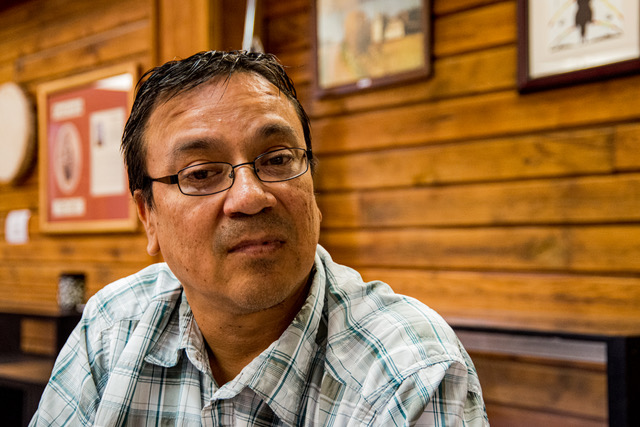
Duane Whapple
Santee Sioux Tribe Museum Historian
Alison M Jones
NWNL Director and Photographer
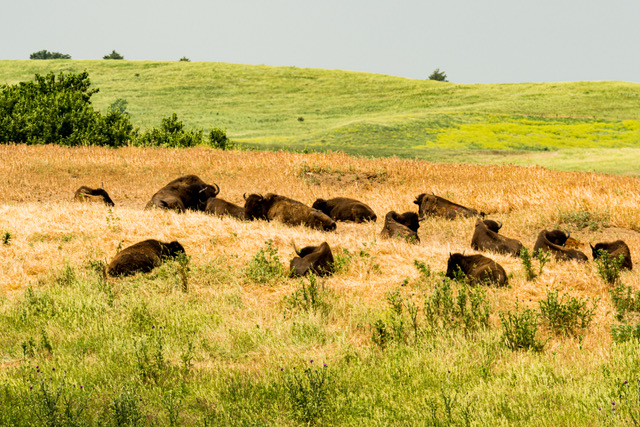
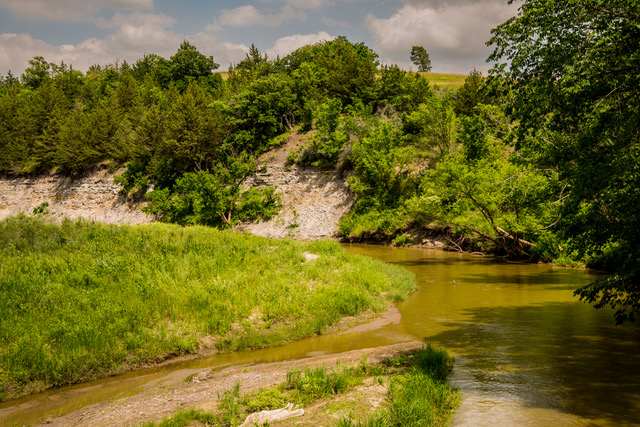
Established in 2006, the Santee Sioux Nation Museum holds has records, photographs and artifacts from 1866 to 1940, documenting their population and the now-defunct Santee Normal Training School. It provides research materials for all interested in learning the history, values and struggles of the Santee Nation as they created their history along the Niobrara River – a National Scenic River and a critical tributary to the Missouri River, the largest tributary to the Mississippi River. The scenic Niobrara flows through a variety of ecosystems and today is popular for those who enjoy canoeing and tubing. This Niobrara River Basin is still home to the Santee, bison, deer and elk – all of which travel across fossil-rich lands.
THE BEGINNINGS of the SANTEE SIOUX
EARLY SCHOOLING in SANTEE
SIOUX LANGUAGES
LOCAL WILDLIFE
LIFE on the NIOBRARA RIVER
A LOSS of CONTROL of the LAND and WATER
RIPARIAN THREATS & CLIMATE CHANGE
THE NIOBRARA: DAMMED & POLLUTED
KEYSTONE XL PIPELINE & THE PONCA
THE SANTEE SIOUX CREATION SITE
WATERSHED CONSERVATION EFFORTS
WATER from the OGALLALA
A SANTEE MESSAGE FOR THE FUTURE
CONNECTING WITH THE RIVER
Key Quote We try to learn and build on the suffering of our ancestors to motivate ourselves. We want to be what they worked hard for us to be. We open our eyes to think about future generations – not ourselves – to make things better for them.
All images © Alison M. Jones, unless otherwise noted. All rights reserved.
NWNL You have said you are a seventh-generation member of your nation, and that this is a time of healing. Do you think things are getting better?
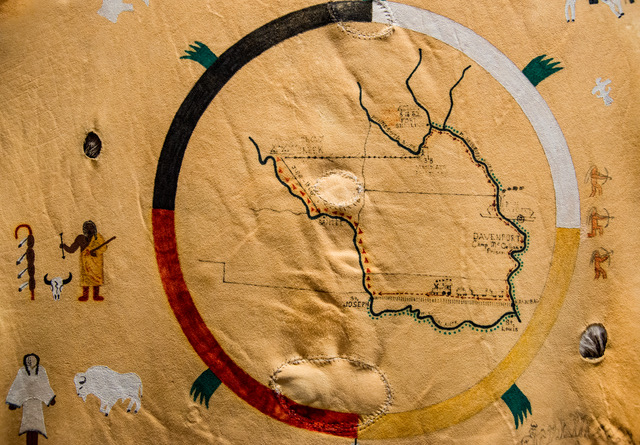
DUANE WHAPPLE I guess I’d say so. After the 1862 uprising, we were exiled from Minnesota. They moved us to Crow Creek after that for 3 years. In 1866 they moved us here to Santee, Nebraska, our present location. Two or three years ago we had a big ceremony with citizens in Minnesota – the ancestors of homesteaders killed in the 1862 uprising.
Minnesota still had a law prohibiting the Dakotas from going back to Minnesota. But they decided to get rid of that law; and the State and the Governor welcomed the Dakota people back into Minnesota. That was a time of healing for our people and for those who are ancestors of the settlers killed in Minnesota.
NWNL How many attended that ceremony?
DUANE WHAPPLE I’d say about 50 to 100 were from here, but there were many who were Dakota people who came from Minnesota. Our people are scattered all over because after the uprising, we were in Canada; then in Cold Creek which is in the middle of South Dakota; then Flandreau, South Dakota; and then down here. We also have communities in Minnesota as well that were reestablished up there.
NWNL Would you ever want to return?
DUANE WHAPPLE To Cold Creek? No, although we’re from Minnesota.
I guess I’ve gotten used to it here. Plus, the people exiled from Minnesota had to go through all this suffering and made this town what it is today. They survived all the punishment they suffered and went through hardships, hunger and such to keep our younger generation alive. I want to be around them, rather the people in Minnesota whom I really don’t know.
NWNL This is your home now.
DUANE WHAPPLE Yeah.
NWNL I arrived yesterday and fell in love with the beauty here. I went right down to the boat ramp after following that long, winding route in. I had no idea what I would find as followed my nose and my intuition. I got out of the car, and immediately felt I was in a magical, sacred space.
It was so beautiful. Was that the old ferry dock?
DUANE WHAPPLE The old ferry dock was towards the west of Santee. It’s on the road we call Crazy Creek. We call it the Channel now, but that’s where you find the road to the Missouri River —but the Missouri wasn’t here. I mean, it wasn’t as close to Santee where it is. When they dammed it back in 1950, there was almost – geez – about two miles of walking that way. The river bottom was way out there. It was all nice farmland right here.
NWNL So the river channel moved?
DUANE WHAPPLE Yes, northward, by about two miles.
It was much closer to the South Dakota side. If you have been through Yankton, South Dakota, you saw how narrow the river is there. That’s how narrow it used to be going through here.
NWNL Yes, I was there yesterday.
DUANE WHAPPLE That’s how narrow the river used to be, through here anyway.
NWNL Wow.
DUANE WHAPPLE But after the damming, plus the Niobrara comes into the Missouri right over here, all that salt and everything comes out and made everything expand with all the sand and everything.
NWNL Does Bazille Creek become Crazy Creek?
DUANE WHAPPLE No, Bazille Creek isn’t Crazy Creek. They are separate. We have many little creeks here. Most are now dried up, but Bazille Creek is one of the few running creeks we have left. Bazille Creek has played a big part of our history, because it was here when we got here. We put our settlements around it for water purposes.
NWNL And are those settlements still there, or they’re all here now?
DUANE WHAPPLE They’re pretty much around this area now. There are a few houses left. We call them “allotment houses” – meaning the government issued land to each. They wanted to make us farmers. So, they gave each family 60 acres of land. Thus, they scattered us all over the reservation – our own land, and they gave us allotment houses, basically government houses, to live in. A few of them have survived. There are a couple that people have lived in from the 1870s to 1880s. But most of them are gone. There are just mostly foundations sitting there.
NWNL I saw a picture on one of the sign boards yesterday on the walkway as you come up the boat dock of an old wooden building. It seems it was removed and replaced by new apartments. What was the original purpose of that building?
DUANE WHAPPLE I put those together. That building is from our Normal Training School – The Santee Normal Training School. They started that in 1870 when we first got here. The Presbyterian Society and American Missionary Association were successful with that school. They had an enrollment of 400 students. This whole side of town was all 18 big giant buildings. The one you saw in the picture was on the right side of this museum. It was here in that open field – right here.
Now it’s called Davis Hall. The first level was our dining hall and the second level was for classrooms. The third level was where the teachers lived in.
NWNL When was Davis Hall operational?
DUANE WHAPPLE From1870 to 1938.
NWNL And then that was replaced by?
DUANE WHAPPLE They created the school, because they couldn’t get federal funding for the school. It was the only boarding school in the United States teaching the kids in their own language, rather than English. Thus, the US government wouldn’t fund it. So, the American Missionary Association funded it during the whole entire time the school was open.
NWNL Is your language still alive and used?
DUANE WHAPPLE Yes.
NWNL Is the Santee Sioux language different, say, from the Lakota Sioux?
DUANE WHAPPLE No. The difference between our language between us and Lakotas and the Yankton Sioux tribe is—
The Sioux are all from Minnesota, but we reached such a high population in Minnesota, Iowa and Wisconsin that the hunting was getting too poor. Animals became sparse because there were too many of us. So some of the Sioux migrated west to hunt buffalo. That’s where the Lakotas come from. They moved west and became the Lakotas; and then the Nakota – that’s the Yankton Sioux tribe. They moved to the central part of South Dakota and that area became their homelands in the 1700s. That’s when they started migrating west. But the only difference in our language is that when we say a word like “wombadee,” it means eagle. We say “wombadee “with a D in it; but the Lakotas say, “wombalee” with an L in it, instead of a D. And the Nakotas, the ancient Sioux, say “wombanee” with an N in there. ?That’s the only difference in our language.
NWNL What does “tatonka” mean?
DUANE WHAPPLE “Tatonka” is the earth. I think we all say that word the same way. I have no reason for why they don’t pronounce the N. I think it’s just certain parts on the border that changed the lettering.
NWNL Maybe it’s because of Kevin Costner in the movie “Dances with Wolves.” That’s how I know the word “tatonka.”
DUANE WHAPPLE I think it’s because of the slur that we put in it with the changes.
NWNL There’s so much I’d like to ask you, but I need to stick to my subject – water and the value of the rivers. I want people to understand that we should take better care of our rivers and water resources .So let’s focus on the Missouri and its tributaries, the value of those rivers to your nation, how would you describe the importance?
DUANE WHAPPLE I guess our greatest gift is the wildlife in our area. We are highly respectful of the wildlife. There are many animals and birds here. Wet depend on this wildlife. Even in Minnesota, we were close to the duck population and the geese. All our teepees had pictures of ducks on them. They were green and yellow and red, and we actually have a teepee over there from that time. We hunted ducks and geese. Some of the kids even had them for pets before white man contact. We used to have animals for pets – like ducks, geese and bears, even mountain lions. Kids had those for pets!
We do fish a lot, but fishing kind of died out in 1960s, 1950s – or so. Nobody fished that much then; but now it’s kind of starting to come back. Everybody’s coming out now to go fishing on that river.
NWNL Why do you think it died out?
DUANE WHAPPLE I guess because people were more dependent on getting their stuff at the store. The economy kind of changed things a bit, to where our people weren’t so dependent on getting their own food, I guess. So, they were buying their stuff at the store, and kind of lost interest in going fishing or hunting. Today we have some hunters in this area, but not very many. People don’t hunt as much as they used to back then.
NWNL What about fishing?
DUANE WHAPPLE The fishing is for recreational purposes, I guess.
NWNL The same would be true of hunting?
DUANE WHAPPLE Most people hunt for meat, but a handful of people hunt.
NWNL Do they use old-style techniques?
DUANE WHAPPLE No. Many hunt in this area; but 90% of them are from out of town. We do get a large revenue, however, from hunting permits and fishing permits and such.
NWNL How would you answer if somebody landed on this planet from Mars asked you, “What are these rivers for?”
DUANE WHAPPLE For life, ours as well as for the animals in the area and plants. I guess rivers are for everything.
NWNL Did the Sioux go downriver from here via the Niobrara to use the Missouri River for transportation – perhaps in canoes? I ask because I know this river is not easy to navigate.
DUANE WHAPPLE Even when we were here in 1866 and stuff, we used canoes to come across. We would have to angle the canoe to cross the channel. We have certain points where you can go across, where you can come back, or where you end up coming back. When I was younger, we used to swim across the part where the current went through. We had to do that at an angle, or we’d up like a banana on an island way over on the other side. On the way back, it was pretty hard, because we had to walk back through that current.
NWNL What changes or threats to the river have you seen?
DUANE WHAPPLE I’ve seen the insecticides and pesticides the farmers are using. I think they are the reason why these creeks are dried up. There used to be a creek that ran in the middle of Santee, but it is a ravine now. There used to a big creek that ran through here, and people used to fish and swim in it. North of here there used to be a bridge that went across to Springfield. You’ll still see the foundation of it.
It was the farmers who dammed off Bazille Creek. So now it doesn’t run through there anymore. They used it for their cattle. That’s pretty much what happened to all our creeks – they dammed them off. On Bazille Creek, people used to fish and swim in that all the time, but now it’s bad. You can’t swim in there, because of that E. Coli poison in there.
NWNL That E. coli would be runoff from the cattle?
DUANE WHAPPLE Yeah, manure.
NWNL And then you also have the problems of pesticides and insecticides flowing into your waterways.
DUANE WHAPPLE The tribe only uses 80% of their land – 85% maybe. And 80% to 85% of their land is not owned by the tribe anymore. It’s in a Trust – but it’s our land. Now other people, have their leases, and own their land. During the allotment period, many of our people couldn’t afford land and couldn’t keep their cattle up in that land. So, we’re allotted.
Our people couldn’t become successful farmers, because they didn’t know much about farming. Folks came in and just said, “Here. Here’s some land and some seed. Try to farm it. We weren’t used to that kind of labor. Plus, the Dakota men used to think women were the ones who planted the seeds. They didn’t think men had to do that job, so it took a long time for our men to farm.
There were many here who farmed in the 1920s and ’30s. Then some natives became successful with own farms. But that kind of died out in the ‘40s and ‘50s.
NWNL So then the tribe leased most of the land, 80% to 80%, to others, commercial agriculture who came in and planted it, and most of the crops they have in there now, or what, corn?
DUANE WHAPPLE Most of their land that we were given in Nebraska was grazing land. On about 20% of it, you can plant crops on, but most of it is used for grazing. We do have our own cattle here on a large land base. We now have the largest herd of cattle we’ve ever had.
NWNL What’s the size of the Santee herd now?
DUANE WHAPPLE Maybe 300 to 400 head, maybe a bit more.
NWNL Do you have more cattle on leased land?
DUANE WHAPPLE No. We can’t put our cattle on leased land, just on reservation land.
NWNL Oh, I thought the leased land that you mentioned was within the reservation.
DUANE WHAPPLE Well, the lands are officially ours, but whoever has that land has what’s considered private property with rights, but we can’t do anything with that land. This is a highly-hunted area. So when hunters come around, people who bought the land rent that land for a large amount of money.
NWNL So there are threats to local water quality of the creeks that run into the Missouri with insecticides, pesticides, runoff and E. coli. On top of those issues, do you see signs of climate change or its impacts?
DUANE WHAPPLE Yes, you can tell by the mulberries that grow here. Usually, mulberries grow in the beginning of May – or they used to when I was growing up. Now with climate change, they don’t come out until now – the middle of June. They’re just now coming out.
You can also tell the difference with mosquitos and bugs. For some reason, they’re not as bad as they used to be here. They used to be just horrendous in this area.
NWNL Why do you think that is?
DUANE WHAPPLE Maybe because of the real hot summers we have now and the real cold winters. Winters don’t seem as long they were before, so I’m not sure what the deal is.
NWNL I don’t understand why the mulberries would be later rather than earlier.
DUANE WHAPPLE It’s a timing thing, because they’d be all sprouting out the beginning of May; but it’s June and they’re just now coming out. Two years ago, they didn’t come out at all. That was weird.
NWNL Do you see any higher floods or worse droughts than you’re used to?
DUANE WHAPPLE I don’t know. I’ve only seen two floods in the Missouri River. The last one was 3-4 years ago when it flooded almost across the whole basin. We just had a drought 3 years ago, the same time as the floods.
NWNL Has this town always been so close to the Niobrara River? Was it ever flooded and thus moved back?
DUANE WHAPPLE No. This town never moved, but Niobrara River moved. Our town has always been here on the bluff. Even when the river was way on the other side, we were always here on the bluff, yet there were farms on the bottom part. But of course, people who had farms down there, had to move when they dammed the river.
NWNL How do you feel about the dam?
DUANE WHAPPLE I don’t know. It doesn’t benefit us. Maybe we are the ones taking advantage of the river and using it recreationally, the way Yankton does.
NWNL Is pollution of the river a concern?
DUANE WHAPPLE I guess, because nobody swims in it. When I was growing up, we swam in that river all the time and didn’t worry about it. Now they say nobody should swim in it.
NWNL On the subject of pollution, the proposed Keystone XL pipeline is one of reason I’m here. Today I’m headed to Mills, which is where the pipeline would cross from South Dakota.
Then I’ll go down to O’Neill, Neligh and Steel City. Is the Santee Sioux Nation at all involved in of those communities’ actions or protests over the Keystone XL? Are there other Native American groups that are actively involved in those protests?
DUANE WHAPPLE I’m working with the Ponca tribe and possibly a Sioux tribe about bringing awareness to the medicinal plants or whatever that might be growing in that area. Now they’re doing studies of that to see if medicinal plants are in the area.
NWNL Which plants they would be?
DUANE WHAPPLE We really don’t want to be specific yet. One example of heritage farming involves the Poncas near Neligh, Nebraska. They have planted their sacred corn across the intended path of the Keystone XL pathway.
NWNL The Ponca’s harvest corn! Yes, I’ve been to Neligh to document their protest and have seen their images of them planting that corn!
DUANE WHAPPLE Down by Neligh is the path of the XL pipeline! But I’m not sure if that protest will do any good, or not. But they’re making a dent. They’re blocking the pipeline.
NWNL So I understand.
DUANE WHAPPLE We’re active. The Poncas stayed in Nebraska and have protested. I guess there’s nothing more we can really do to prevent the pipeline at Standing Rock. Our hopes and demonstrations were like a big old roadblock to prevent the XL pipeline. If we do these protests, it may prevent them building that.
NWNL It seems to me to be a moment when so many groups came together: the Native American tribes, the vets, friends from New York. They drove out here with food for Thanksgiving. So many people got involved in your environment. Ten years ago, I witnessed what the Chinook people were doing on the Columbia River with the Colville tribe and other tribes. I saw the tribes and the white people come together to protect their environment. The tribes in this country have brought so many people into an environmental awareness. I feel they activated this big step and awakened awareness of the issues.
I gather from the people I’ve met that the chances of stopping this Keystone XL pipeline are miniscule. But to me it’s still worth speaking out. That is why I’m here: to say our water resources are critical and essential. This pipeline will cross seven major rivers – and the Ogallala Aquifer. If there’s a leak – and someday, there will be a leak – it will be very damaging.
DUANE WHAPPLE Our link is to our Dakota life. We saw that pretty much destroyed in St. Paul, Minneapolis, at St. Anthony Falls, when they put in their factories. Now that whole Falls area is almost a level surface now.
NWNL Tell me about your place of creation.
DUANE WHAPPLE Many people used to go to that place of creation to pray. It was where the rocks stuck out of the waterfalls where the Mississippi and Missouri Rivers met. The Dakotas used to sit there in the middle to pray. It was our sacred site but then it was stolen and destroyed. Watching it be destroyed was rough.
NWNL Where do you find hope today? You have dismal stories. I’ve been to the falls at St. Anthony, so I know the big mills there that you’re talking about.
DUANE WHAPPLE Where do I get my hope? We built up our economy after our town nearly died. In the 1940s, after Normal Training School clos, and World War II broke out, 80% of our reservation moved away to Sioux City or Omaha to work in factories for World War II.
For a long time, Santee only had a population of only 20 to 30 people. Slowly our people there, worked on getting money for housing. They slowly started building houses a little bit at a time, as the families were slowly moving back. Maybe 50 to 60 houses were finally built, boosting the economy so we could build a store and get something going. It took a long time in the ‘60s and ‘70s to build that up, but we did build up our economy. Now we’ve got our own casino, a C-Store and our own gas station.
NWNL What is a C-store?
DUANE WHAPPLE It stands for “Convenience store” – like a gas station store. All our businesses here employ maybe 200 people. We’ve got our health center and are pretty much taken care of now. We’re getting more self-supported and not relying on the government for all our stuff.
NWNL That’s good. But what employment is there for most people? What work is there for the Santee Sioux?
DUANE WHAPPLE I guess the biggest employer we have is the casino out there. We’re trying to get all our younger group, ones in their 20s into a working schedule or whatever. Having the willingness to go to work every day is hard; but they’re slowly getting back in it. That 7th-generation thing is starting to come back. We do many more cultural things now and focus more on speaking the Dakota language. It’s starting to come back, and we’re starting to learn we used to do, using old practices as learning tools. We’re learning from our own history.

NWNL What do you hope happens – either from within the Santee Nation or from outside – to preserve the environment, the watershed, and your water supplies?
DUANE WHAPPLE Our focus is to be more protective of our resources, particularly with our water and our creeks. There is an EPA division here, but they don’t do much to enforce anything. We tell these farmers not to use insecticides when they’re planting and such; but our EPA is quite lenient and don’t do much to inform our community. That’s why Bazille Creek is all messed up. Folks let their cattle run around Bazille Creek where they leave their droppings in and around the water.
I think EPA started up here in late 1980s. That’s when we got funding for that program.
NWNL But I gather it was never enforced.
DUANE WHAPPLE No. I worked with a guy in charge of putting insecticides on everything. and I saw the water samples. They added all that stuff on our crops. They had us worry more about ourselves than our environment or our food.
NWNL Are you saying the EPA should be less involved – or even that they’re not even involved at all here now?
DUANE WHAPPLE I wouldn’t go that far.
NWNL Well, it seems they’re not as active as they should be and now will they become more effective. It sounds like they’ll become weaker, if anything, at this point. How can you work around that? What other means do you have to inform those who are spreading insecticides and herbicides of the consequences? How can you reach out to people and say, “Hey, we’re creating a problem that’s going to be bigger than us if we don’t stop now?”
DUANE WHAPPLE I don’t know. That would be hard. We don’t use the Bazille Creek as much as we used as a water resources, because now everything is from the well since the Ogallala Aquifer is below us. Now we get well water from there. I guess nobody is as concerned about the Bazille Creek as much as they used to be.
I’m not even sure there’s any fish anymore there.
NWNL But the Bazille Creek goes into the Missouri River! The saying has been, “The solution to pollution is dilution,” and I know the Missouri is a big river…. But if every creek dumps all these chemicals into tributaries to the Missouri, we’ll always have a “Dead Zone” down in the Gulf of Mexico.
Teaching people that upstream/downstream responsibility is critical! Certainly, your nation and all the tribal nations know the importance of taking care of this land for generations to come. We really need the help of your tribe and all the tribes to lead us back to a healthier, more sustainable approach to living on the land.
NWNL Are there environmental studies or tribal groups studying local water quality issues?
DUANE WHAPPLE We have an EPA program out on Highway 12 that works with the water quality and air quality. That’s why we have these towers up here – they are air quality towers. Additionally, they take samples of the well water that’s below ground.
NWNL From the aquifer?
DUANE WHAPPLE Yes.
NWNL What’s the quality of water from the aquifer here, according to those samples?
DUANE WHAPPLE I’m not sure. You need to request results of their samples. I don’t think they regularly post them for the public. Sometimes, if the levels get bad, they’ll post it.
NWNL Do you hear of any concerns about the Ogallala reserves running out?
DUANE WHAPPLE Yeah. That’s our main water. It’s our lifeblood. We really have no solution right now. There’s no cheap system to use the Missouri as drinkable water. It’s so polluted now. And it would be hard to get anything out of the Ogallala. How would we come up with the money to get that water to use as drinking water?
NWNL So your only drinking water supply is from the ground – not from the river.
DUANE WHAPPLE The runoff goes into our drains or whatever and then goes into the river.
NWNL But your septic, your wastewater doesn’t go into the river. It’s the runoff from the fields that causes your non-point pollution.
DUANE WHAPPLE Yes.
NWNL What message would you like to leave regarding what we can all do? How might we come together to better protect our water resources?
DUANE WHAPPLE I don’t know. I guess we each – right now – need to look at ourselves as to how to address the future. We can’t leave it to the future generation coming up. It’s just like our people right now. We are trying to build ourselves back up to honor the values from our ancestors. They went through a lot of suffering for us to be here today. We can’t waste all our or pollute our natural resources. If we do, our future won’t have anything that’s worth drinking or living on to survive.
NWNL That message, is so clear. Is it being instilled in your youth? I wonder if that approach that something that happens more in rural landscapes than in our cities?
DUANE WHAPPLE We’re people that look up there [as he pointed to the sky].. We know what our ancestors went through. We try to learn and build on their suffering to motivate ourselves. We want to be what they worked hard for us to be. We open our eyes to think about future generation – not ourselves – to make things better for them, because our grandparents made it better for us.
NWNL Do you think there’s a greater interest among the youth of Santee and other tribal nations in caring for the environment than in the general population of this country?
DUANE WHAPPLE Yes, I guess so. We teach about medicinal plants to those who want to learn. There are people you can’t interest in their own history. But here are those willing to learn to whom we pass down a bigger awareness. I guess Standing Rock had a positive effect on that. It seems we’re becoming more aware of how we pollute our environment. A couple of years ago, people dumped their trash – everything, old couches and stuff – right over there by the river.
As that stuff blew and flooded into the river, it finally affected our tribe. As a whole tribe, we worked and found the money to clean up that whole area and remove that trash. So now it’s quite clean over there! Animals and stuff now wander over there, so I guess we are in pretty good standing with our environment.
NWNL As I go across this country documenting rivers, I follow red-winged blackbirds or a line of willows, seeking the river’s edge. Often, I’ll find an old sofa dragged to the river’s edge. Sometimes people are sitting on them, just looking out at the water. Some are hobos; some live under the bridges, but they all appreciate the tossed sofa, dragged over to the river for a view of the water.
On your trail signage, there’s a photograph of ice-fishing in the winter.
DUANE WHAPPLE Some people do that, but not many. I guess people now are scared they’ll fall into the ice. We’re not as brave as we used to be. But back in the 1890s or early 1900s, when the missionaries were here, they went on the ice every winter. They’d take their wagons down there, and use their axes to cut out big chunks of ice. They would put the ice in their wagons to take them up to the icehouses. That way, during the summertime, especially if people had fevers, they would use that ice to cool them off.
DUANE WHAPPLE We are connected with the river. Here in Minnesota, we all had canoes. The Minnesota Historical Society has the canoes we used in the museum. It’s kind of hard to relate to being in a museum, because we just got here 150 years ago. That’s not that long.
NWNL Yes, it is beautiful. I’m sure Minnesota’s beautiful too where you were, but this is lovely. I was quite touched yesterday afternoon when I went down and sat by the water. There was one little chair there by where someone had a bonfire. I sat there and just mulled for a few minutes. I thought, “Oh, please, let us protect these waters.” It’s so lovely to see the Missouri stretch out and have all the wetlands and the braided islands Nature offers the river.
DUANE WHAPPLE I like those little islands. I often go out with my metal detector to see what’s out there.
NWNL Do you go out to the islands often?
DUANE WHAPPLE We used to go sit out there, but that kind of died out. Many of our people don’t have boats anymore, so we don’t go out that far. Plus, they say not to swim in the Niobrara River anymore. So, people don’t often go in the water or swim across the river anymore.
NWNL But the Niobrara still holds untouchable beauty. Thank you so much, Duane, for sharing your thoughts, memories and respect for the river.
Posted by NWNL on October 14, 2026.
Transcription edited and condensed for clarity by Alison M. Jones.
All images © Alison M. Jones, unless otherwise noted. All rights reserved.